
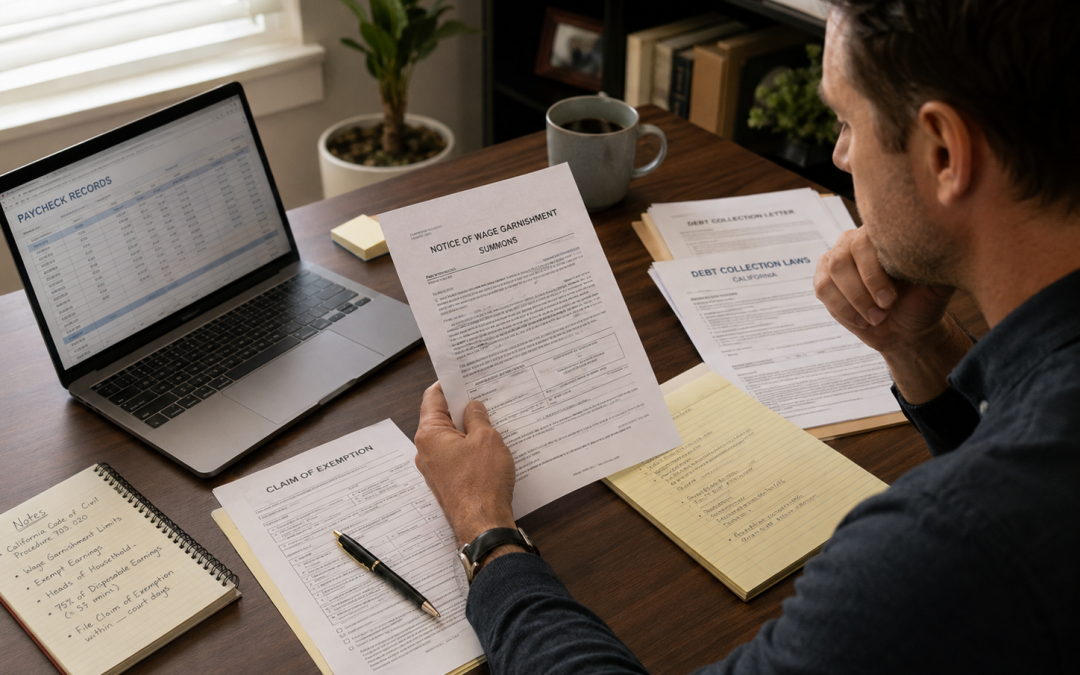
California wage garnishment allows a creditor to collect money from a person’s paycheck after receiving the required legal order. The employer withholds part of the employee’s earnings and sends the money through the proper collection process.
Wage garnishment can affect rent, food, transportation, childcare, and other basic needs. However, California law limits how much can come out of a paycheck, and some workers may ask the court to reduce or stop garnishment through a claim of exemption.
What Is Wage Garnishment in California?
Wage garnishment happens when a judgment creditor uses a court process to collect money from wages. In many civil debt cases, the creditor must first win a judgment. Then, the creditor may seek a writ of execution and an earnings withholding order.
California Courts explains that a creditor seeking wage garnishment generally uses an Application for Earnings Withholding Order after obtaining a writ of execution. The levying officer, often the sheriff, then sends the earnings withholding order to the employer.
Once the employer receives the order, the employer must follow the withholding instructions unless the court or levying officer changes the order.
How Much Can Be Garnished From Wages?
For many ordinary judgment debts, California limits wage garnishment to the lesser of two amounts. Under Code of Civil Procedure Section 706.050, the maximum generally equals the lesser of:
- 20% of the employee’s disposable earnings for that week
- 40% of the amount by which weekly disposable earnings exceed 48 times the state minimum hourly wage
Disposable earnings usually means wages left after legally required deductions. Taxes and required payroll deductions may reduce disposable earnings. Voluntary deductions may not always reduce the amount used for garnishment calculations.
California’s statewide minimum wage is $16.90 per hour in 2026. Because the formula uses the state minimum wage, the protected amount can change when the minimum wage changes.
Are All Garnishments Subject to the Same Limit?
No. Different debts may follow different garnishment rules. Ordinary consumer debt judgments usually follow California’s general wage garnishment limits. However, support, taxes, student loans, and bankruptcy orders may follow separate rules.
For example, child support wage withholding can involve different formulas and priority rules. Tax agencies may also use separate withholding orders. The Franchise Tax Board explains that some earnings withholding orders for taxes and certain state collections follow distinct instructions and may not use the same calculation as ordinary court-ordered consumer debt garnishments.
Because the debt type matters, the employee should review the order carefully. The form may identify whether the withholding relates to a court judgment, child support, taxes, or another debt.
Can a Worker Stop or Reduce Wage Garnishment?
Sometimes. A worker may file a claim of exemption when wage garnishment makes it hard to pay for basic family needs. California Courts explains that a person may use a claim of exemption to ask the court to stop or reduce wage garnishment.
A claim of exemption often requires financial information. The worker may need to list income, expenses, dependents, rent, food, transportation, medical costs, childcare, and other basic living expenses.
The claim goes to the levying officer listed on the earnings withholding order. If the creditor opposes the claim, the court may set a hearing. In some cases, the judge may reduce the garnishment or stop it if the worker proves the withheld wages are necessary for support.
What Forms May Be Needed?
The exact forms depend on the case and the court process. Still, wage garnishment exemption requests often involve court-approved forms.
Common forms may include:
- Claim of Exemption
- Financial Statement
- Earnings Withholding Order
- Notice of Wage Garnishment
- Proof of mailing or service documents
- Court hearing notices
California Courts provides a self-help page for people who need to make a claim of exemption. The page explains where to send the documents and what may happen if the creditor objects.
Can an Employer Fire Someone for Wage Garnishment?
California law protects workers from termination for a single wage garnishment. California Courts states that an employer cannot fire an employee because of one wage garnishment.
However, repeated garnishments or multiple debts may create more complicated issues. Federal law also limits discharge because of garnishment for one debt, but protection can vary when multiple garnishments exist.
An employee who faces discipline, threats, reduced hours, or termination after wage garnishment should keep records. Helpful records may include payroll messages, HR emails, schedule changes, write-ups, and the garnishment notice.
What If the Debt or Judgment Seems Wrong?
A wage garnishment may reveal an old judgment, a debt the worker does not recognize, or a case where the worker believes they never received proper notice. In that situation, the worker may need to review the court file.
California Courts offers guidance on how to look up a court case. Court records may show the complaint, proof of service, judgment, writ, and garnishment papers.
A claim of exemption focuses on financial hardship. It does not automatically erase the judgment. If the judgment itself has a problem, a separate court request may be needed.
FAQs About California Wage Garnishment
How much can a creditor garnish from wages in California?
For many ordinary judgment debts, California generally limits garnishment to the lesser of 20% of disposable weekly earnings or 40% of the amount by which weekly disposable earnings exceed 48 times the state minimum hourly wage.
Can wage garnishment happen without a court judgment?
Many consumer debt garnishments require a court judgment first. However, some debts, such as taxes, child support, student loans, or government debts, may follow different procedures.
Can a worker claim an exemption from wage garnishment?
Yes. A worker may ask the court to reduce or stop garnishment if the withheld wages are needed to support the worker or the worker’s family.
Does a claim of exemption return money already garnished?
A claim of exemption usually protects wages after the claim is filed. California Courts notes that a person generally gets wages back only from the time after submitting the claim.
Can an employer ignore an earnings withholding order?
Usually, no. Once properly served, the employer must follow the order unless the court, levying officer, or applicable law changes the withholding obligation.
Legal Help With California Wage Garnishment
Wage garnishment can affect income, household expenses, debt collection strategy, court records, and employment. A strong next step often depends on the debt type, withholding order, paycheck amount, household needs, exemption rights, and whether the judgment appears valid.
Her Lawyer, A Professional Law Corporation, assists with California matters involving wage garnishment, debt collection, employment consequences, and related legal issues. Contact Her Lawyer to request a confidential consultation and discuss possible next steps.