
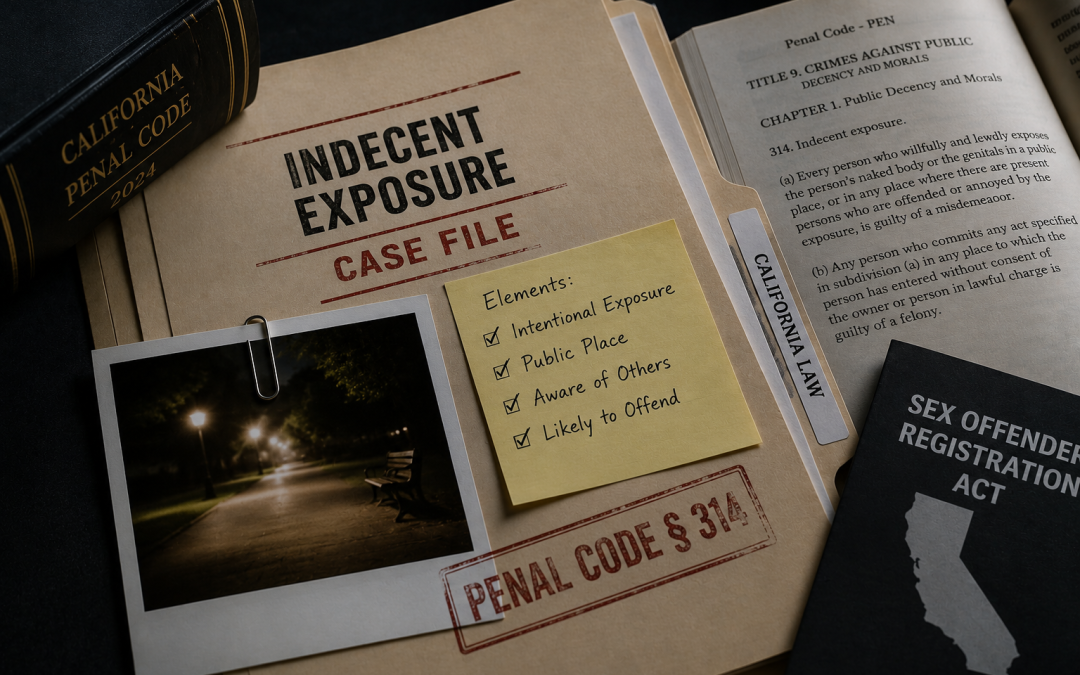
Indecent exposure laws by state punish lewd public exposure, public sexual conduct, or exposure visible to others. Each state defines the offense differently.
Most states treat a first offense as a misdemeanor. However, penalties may increase when the conduct involves a child, repeat conviction, sexual gratification, public sexual conduct, trespass, or a related sex offense.
What Is Indecent Exposure?
Indecent exposure usually means intentional exposure of private parts in a public place or in a place where others may see the exposure and feel offended or alarmed. Some states require sexual intent. Others focus on whether the conduct was lewd, offensive, reckless, or likely to alarm another person.
Not every form of nudity qualifies. Breastfeeding, accidental exposure, medical treatment, locker-room nudity, or lawful expressive conduct may fall outside an indecent exposure statute depending on the state.
Many states also use different names for similar conduct, including public indecency, lewdness, open and gross lewdness, public lewdness, or disorderly conduct.
California Indecent Exposure Law
California’s indecent exposure law appears in Penal Code Section 314. The statute applies when a person willfully and lewdly exposes private parts in a public place or in a place where others are present and may be offended or annoyed.
A first offense is usually a misdemeanor. However, California may treat the offense as a felony when the person entered an inhabited dwelling or building without consent before the exposure. A second or later conviction under the statute may also be a felony.
California lists Penal Code Section 314 among the offenses that may require registration under the Sex Offender Registration Act. The length and conditions of registration depend on the conviction, assigned tier, and individual court record.
Her Lawyer’s article on indecent exposure on private property explains how location can affect these cases.
State-by-State Overview
This chart gives a general snapshot. State statutes may use different terms, and local ordinances can also apply.
State |
Common First-Offense Classification |
Aggravating Factors |
|---|---|---|
Alabama |
Misdemeanor |
Third or later conviction may be felony |
Alaska |
Misdemeanor or felony by degree |
Minor present, masturbation, or prior conviction |
Arizona |
Misdemeanor |
Minor present or repeat conviction |
Arkansas |
Misdemeanor |
Multiple prior convictions |
California |
Misdemeanor |
Repeat offense or exposure after unlawful entry |
Colorado |
Misdemeanor |
Repeat conviction or child-related facts |
Connecticut |
Misdemeanor |
Public sexual conduct may create related charges |
Delaware |
Misdemeanor |
Exposure involving a child |
Florida |
Misdemeanor |
Repeat offense or victim under 16 |
Georgia |
Misdemeanor |
Third or later conviction may be felony |
Hawaii |
Petty misdemeanor |
Related conduct may create separate charges |
Idaho |
Misdemeanor |
Repeat conviction may be felony |
Illinois |
Misdemeanor |
Repeat conviction or school-zone facts |
Indiana |
Misdemeanor |
Repeat offense may be felony |
Iowa |
Serious misdemeanor |
Conduct involving a child may increase penalties |
Kansas |
Misdemeanor |
Person under 16 present |
Kentucky |
Misdemeanor |
Repeat first-degree offense may be felony |
Louisiana |
Felony exposure-related offense possible |
Serious public obscenity facts |
Maine |
Misdemeanor |
Repeat conviction |
Maryland |
Misdemeanor |
Related sex offenses may increase exposure |
Massachusetts |
Misdemeanor or felony |
Open and gross lewdness may be felony |
Michigan |
Misdemeanor |
Aggravated exposure or sexually delinquent status |
Minnesota |
Misdemeanor |
Minor present, restraint, or repeat conviction |
Mississippi |
Misdemeanor |
Third or later conviction may be felony |
Missouri |
Misdemeanor |
Child-related sexual misconduct may be felony |
Montana |
Misdemeanor |
Minor present or repeat conviction |
Nebraska |
Misdemeanor |
Related public indecency conduct |
Nevada |
Gross misdemeanor |
Minor present or repeat conviction |
New Hampshire |
Misdemeanor |
Minor present or repeat conviction |
New Jersey |
Disorderly persons offense |
Child or vulnerable person present |
New Mexico |
Misdemeanor |
Aggravated conduct may be felony |
New York |
Misdemeanor |
Prior conviction or child-related conduct |
North Carolina |
Misdemeanor |
Minor present may create felony exposure |
North Dakota |
Misdemeanor |
Repeat conviction or school-zone facts |
Ohio |
Misdemeanor |
Minor present or repeat conviction |
Oklahoma |
Felony exposure-related offense possible |
Lewd conduct and related sex offense facts |
Oregon |
Misdemeanor |
Prior sex offense may create felony exposure |
Pennsylvania |
Misdemeanor |
Minor under 16 present |
Rhode Island |
Misdemeanor |
Second or later conviction may be felony |
South Carolina |
Misdemeanor |
Public, willful, malicious exposure |
South Dakota |
Misdemeanor |
Child-related facts or repeat conviction |
Tennessee |
Misdemeanor |
Child present, school setting, or repeat offense |
Texas |
Misdemeanor |
Child under 17 present may be felony |
Utah |
Misdemeanor |
Minor present or repeat conviction |
Vermont |
Misdemeanor or felony |
Minor present or more serious lewd conduct |
Virginia |
Misdemeanor |
Minor present or repeat conviction |
Washington |
Misdemeanor |
Minor present or prior sex offense |
West Virginia |
Misdemeanor |
Third or later conviction may be felony |
Wisconsin |
Misdemeanor |
Related lewd conduct may affect charges |
Wyoming |
Misdemeanor |
Sexual intent and public view issues |
Because statutes change, a person facing charges should review the exact code section in the state where the conduct allegedly occurred. Her Lawyer’s articles on Ohio indecent exposure laws and Texas indecent exposure laws provide state-specific examples.
When Indecent Exposure Becomes a Felony
Many states increase penalties when the accused person has prior indecent exposure or sex offense convictions. Some states also increase penalties when a child was present.
Felony treatment may also apply when the conduct involved unlawful entry, coercion, threats, sexual acts, public masturbation, or exposure connected to another crime.
A felony conviction can carry prison time, longer probation, higher fines, and more severe collateral consequences.
Sex Offender Registration
Some states require sex offender registration for certain indecent exposure convictions. Others require registration only after a repeat offense, felony conviction, minor-victim case, or court order.
Registration can affect housing, employment, travel, education, internet use, and privacy. The registration question should be reviewed separately from jail time or fines because it may create longer-term consequences than the sentence itself.
Common Defenses
A defense depends on the statute and evidence. Common issues may include lack of intent, accidental exposure, no lewd conduct, no public view, mistaken identity, false accusation, or lawful activity.
A person accused of exposure may also challenge whether witnesses could actually see the alleged conduct. In some cases, video, lighting, distance, clothing, location, and witness credibility become important.
If police obtained evidence unlawfully or violated constitutional rights, the defense may also challenge statements, searches, or identification evidence.
FAQs About Indecent Exposure Laws by State
Is indecent exposure always a misdemeanor?
No. Many states treat a first offense as a misdemeanor, but felony exposure may apply when the conduct involves minors, repeat convictions, prior sex offenses, unlawful entry, or aggravated facts.
Does accidental exposure count as indecent exposure?
Usually no. Most indecent exposure laws require intent, lewdness, recklessness, or sexual purpose. A wardrobe malfunction or accidental exposure may not meet the required mental state.
Can indecent exposure require sex offender registration?
Yes. Some states require registration for certain indecent exposure convictions. Other states require registration only for repeat offenses, felony cases, or child-related conduct.
Is public urination the same as indecent exposure?
Not always. Public urination may lead to a separate offense. It may become an indecent exposure issue only when the facts satisfy the state’s exposure, intent, or lewdness requirements.
Legal Help With an Indecent Exposure Charge
Indecent exposure laws vary widely by state. The exact charge, location, intent, witness evidence, prior record, and registration risk can all affect the outcome.
Contact Her Lawyer to discuss an indecent exposure charge, sex offense concern, or related criminal defense issue.