
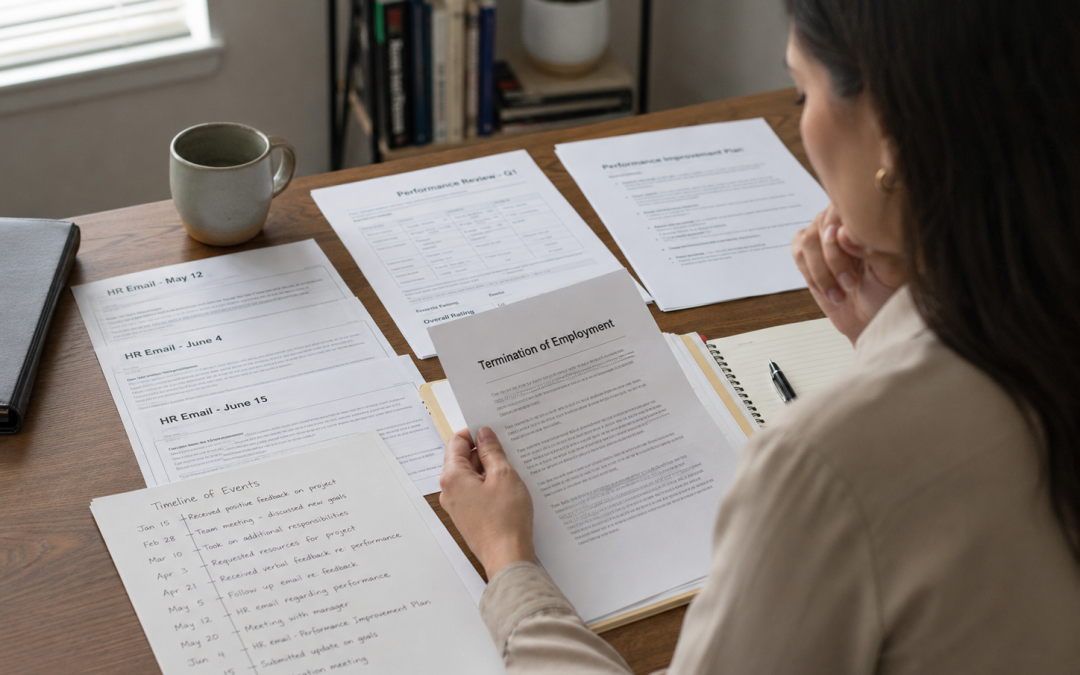
A wrongful termination interview helps organize the facts behind a firing. The interview may happen with a lawyer, HR investigator, government agency, union representative, or workplace decision-maker.
The goal is not only to explain that the termination felt unfair. In California, many jobs are at-will, so an employer may end employment for many lawful reasons. A wrongful termination review looks for facts showing the firing may have involved discrimination, retaliation, protected leave, whistleblowing, wage complaints, disability accommodation, public policy, or another unlawful reason.
What Is a Wrongful Termination Interview?
A wrongful termination interview is a structured conversation about the job, termination, employer’s stated reason, and events leading up to the firing. The person asking questions may want a clear timeline, relevant documents, and names of witnesses.
In California, Labor Code Section 2922 states that employment with no specified term may generally end at the will of either party. However, at-will employment does not allow an employer to fire someone for an unlawful reason.
That distinction matters. A termination may be harsh or poorly handled without being legally wrongful. The interview should focus on facts that connect the firing to protected activity, protected status, contract rights, or another legal violation.
Common Wrongful Termination Interview Questions
Wrongful termination interview questions usually start with basic employment facts. Then, the conversation moves into timing, documents, and possible legal claims.
Common questions may include:
- What was the job title?
- When did employment begin?
- Who made the termination decision?
- What reason did the employer give?
- Was the reason written or verbal?
- Did performance reviews support or contradict the reason?
- Did the employee complain before the firing?
- Did the employee request medical leave or accommodation?
- Did the employee report discrimination, harassment, wages, or safety issues?
- Were other employees treated differently?
- Did the employer offer severance?
- Are emails, texts, or witnesses available?
A clear answer should include dates whenever possible. For example, “HR received the complaint on May 3, and termination happened on May 17” gives more useful context than a general statement about unfair treatment.
Questions About Retaliation and Protected Activity
Retaliation often becomes a key issue in wrongful termination interviews. California protects many workers who report legal violations, oppose unlawful conduct, request protected leave, or assert workplace rights.
The Labor Commissioner explains that employees, former employees, and applicants may file a retaliation complaint when an employer punishes protected activity under laws the agency enforces.
A retaliation interview may ask:
- What protected complaint or request happened?
- Who received the complaint?
- Did the employer know about it before the firing?
- What changed after the complaint?
- Did discipline begin shortly afterward?
- Did supervisors make negative comments?
- Did the employer give shifting reasons?
- Were other workers treated more favorably?
The strongest retaliation facts usually show protected activity, employer knowledge, adverse action, and a connection between the complaint and the termination.
Questions About Discrimination or Harassment
Some wrongful termination interviews focus on discrimination, harassment, or retaliation tied to a protected characteristic. California’s Civil Rights Department handles many employment claims involving discrimination, harassment, disability, pregnancy, family leave, and protected-category retaliation through its employment resources.
Interview questions may cover:
- Did anyone make comments about a protected trait?
- Did the employee report harassment or discrimination?
- Did the employer investigate?
- Did the employee face discipline after reporting?
- Were similarly situated employees treated differently?
- Did the firing follow pregnancy, disability leave, medical restrictions, or accommodation requests?
- Did pay, shifts, assignments, or promotions change before termination?
Protected traits may include race, religion, sex, pregnancy, disability, medical condition, age 40 and over, sexual orientation, gender identity, gender expression, national origin, ancestry, marital status, military status, and other traits protected by California law.
Documents to Bring or Review
Documents often make a wrongful termination interview stronger. They help confirm dates, compare employer explanations, and show whether the firing followed a protected complaint or request.
Helpful documents may include:
- Termination notice
- Offer letter or contract
- Employee handbook
- Performance reviews
- Disciplinary notices
- HR complaints
- Wage complaints
- Safety complaints
- Medical leave requests
- Accommodation requests
- Emails and text messages
- Pay stubs
- Schedule records
- Severance agreement
- Witness names
- Written timeline
The California Civil Rights Department’s complaint process asks for documents such as termination letters, written reprimands, emails, text messages, screenshots, grievances, and other records supporting discrimination, harassment, or retaliation allegations through its complaint process.
How to Answer Interview Questions
A wrongful termination interview works best when the answers stay factual and organized. The employee should avoid guessing, exaggerating, or turning every workplace problem into a legal claim.
Strong answers usually:
- Use dates and names
- Separate facts from opinions
- Identify documents
- Explain the employer’s stated reason
- Mention witnesses
- Describe protected complaints or requests
- Note changes after protected activity
- Acknowledge facts that may hurt the claim
For example, if performance issues existed before the complaint, the interview should address them directly. A complete review should include both helpful and unfavorable facts. That approach gives a clearer picture of the case.
Deadlines and Next Steps
Deadlines depend on the claim. Some retaliation claims may go through the Labor Commissioner. Discrimination, harassment, disability, pregnancy, and protected-category claims may involve the Civil Rights Department. Wage claims, unemployment appeals, union grievances, public employee procedures, and lawsuits may have separate deadlines.
Because these timelines can overlap, the interview should identify any deadline as early as possible. A missed filing deadline can limit options even when the termination appears unlawful.
Her Lawyer’s article on writing a grievance letter for wrongful termination explains how a written complaint may help preserve a clear record after a disputed firing.
FAQs About Wrongful Termination Interviews
What should a former employee say in a wrongful termination interview?
A former employee should explain the job history, termination reason, timeline, complaints or protected activity, employer response, witnesses, and documents. Clear facts usually help more than broad accusations.
Is being fired unfairly the same as wrongful termination?
No. A firing may feel unfair without violating the law. Wrongful termination usually requires facts showing an unlawful reason, such as discrimination, retaliation, protected leave interference, whistleblower activity, or another public policy violation.
What documents help in a wrongful termination interview?
Helpful documents may include termination notices, performance reviews, HR complaints, emails, texts, discipline records, leave requests, accommodation records, wage complaints, schedules, pay stubs, and a written timeline.
Can a termination after an HR complaint support retaliation?
Sometimes. Timing, employer knowledge, discipline history, documents, witnesses, and the employer’s explanation all matter. A termination shortly after a protected complaint may deserve closer review.
Legal Help With a Wrongful Termination Interview
A wrongful termination interview can affect evidence, deadlines, agency filings, severance review, unemployment issues, and possible employment claims. A strong next step often depends on the termination reason, timeline, protected activity, documents, employer response, and available witnesses.
Her Lawyer, A Professional Law Corporation, assists with California employment matters involving wrongful termination, retaliation, discrimination, protected leave, workplace complaints, and related issues. Contact Her Lawyer to request a confidential consultation and discuss possible next steps.