
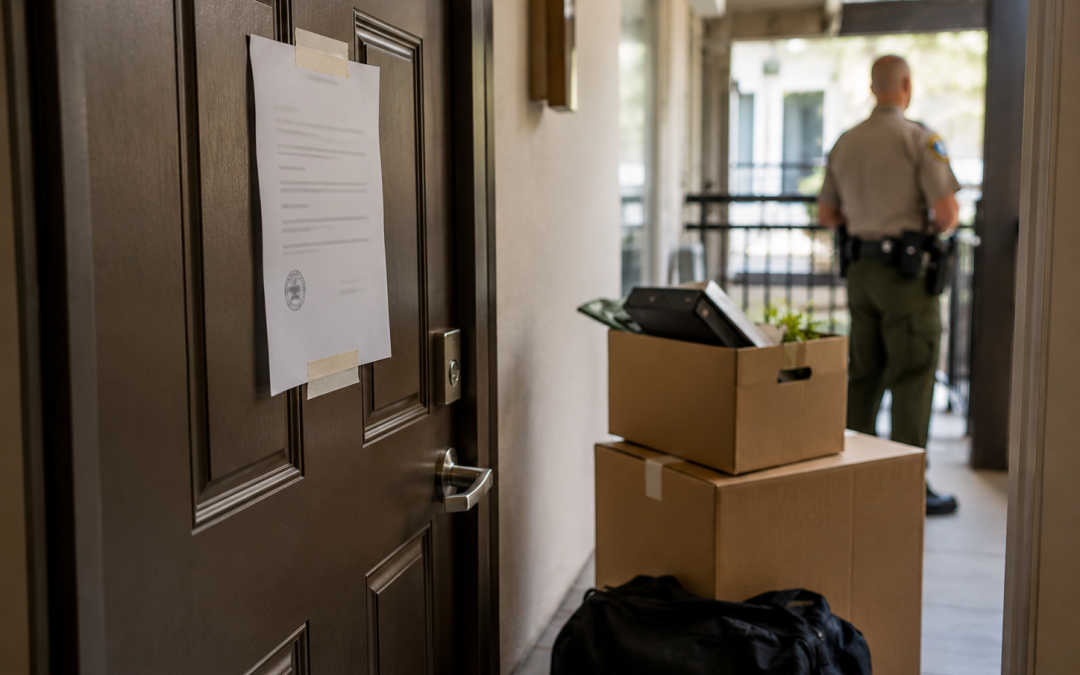
A writ of possession in California is a court order used to enforce a judgment for possession of real property. In many eviction cases, it allows the sheriff to remove occupants after the landlord wins an unlawful detainer case.
A landlord cannot legally remove a tenant by changing locks, shutting off utilities, or removing belongings without the proper court process. The writ gives the sheriff authority to complete the lockout.
What Is a Writ of Possession?
A writ of possession is an enforcement order issued after a court enters a judgment for possession. Under California Code of Civil Procedure Section 712.010, the clerk may issue a writ after entry of a judgment for possession or sale of property.
In eviction cases, the writ is usually directed to the sheriff or marshal in the county where the property is located. The officer, not the landlord, carries out the physical lockout.
California courts use Form EJ-130, titled Writ of Execution, for a writ of possession of real property.
How Writs of Possession Relate to Evictions
A writ of possession usually comes after an unlawful detainer judgment. An unlawful detainer is California’s court process for eviction.
California Courts explains the basic eviction process for landlords and tenants. The landlord must generally give the proper notice, file the unlawful detainer case, serve the tenant, and obtain a judgment before a sheriff lockout can occur.
A writ of possession is not the first step. It is the enforcement step after the landlord has won possession through the court.
Does the Landlord Automatically Get a Writ?
Not exactly. If the tenant does not respond to the unlawful detainer complaint on time, the landlord may ask the court for a default judgment. If the landlord wins by default, settlement, or trial, the court may then issue a judgment for possession.
After judgment, the landlord applies for the writ. The court clerk issues the writ if the legal requirements are met.
This is different from a writ of mandate, which asks a court to order a public agency or official to perform a legal duty. A writ of possession is about enforcing possession of property.
What Happens After the Writ Is Issued?
After the court issues the writ, the landlord usually takes it to the sheriff with required instructions and fees. Each county may have its own procedures.
Once the sheriff receives the writ, the sheriff serves or posts a notice to vacate. Under Code of Civil Procedure Section 715.020, occupants generally have five days to vacate after service or posting.
If the occupants do not leave within that period, the sheriff may remove them and place the landlord in possession.
The landlord should be ready to meet the sheriff at the property if the county requires it. The landlord may also need a locksmith present after the lockout.
What Happens to the Tenant’s Belongings?
A landlord should not throw away a tenant’s belongings immediately after a lockout. California has rules for personal property left behind after an eviction.
The judgment and writ process may include notice about how a tenant can claim belongings. Under Code of Civil Procedure Section 1174, the landlord may need to release personal property if the tenant makes a timely claim and pays lawful storage costs.
These rules can be fact-specific. Landlords should follow the notice and storage requirements carefully before selling, discarding, or keeping any property.
Can a Writ of Possession Expire?
Yes. Under Code of Civil Procedure Section 712.020, the levying officer may not seize property under the writ after 180 days from the date the writ was issued.
A landlord should not wait too long after receiving a writ. Sheriff scheduling times vary by county, and delays can affect enforcement.
Can a Tenant Stop a Writ of Possession?
A tenant may have limited options after a judgment has been entered. The available response depends on the reason for the judgment and the stage of the case.
Possible options may include asking the court to set aside a default, requesting a stay of execution, appealing in limited circumstances, or raising a legal issue before the lockout. These options can move quickly and may require specific court forms.
A tenant should act immediately after receiving notice from the court or sheriff. Waiting until the lockout date may leave fewer options.
FAQs About Writs of Possession in California
Is a writ of possession the same as an eviction notice?
No. An eviction notice usually comes before the lawsuit. A writ of possession comes after the landlord wins a judgment for possession.
Who performs the lockout?
The sheriff or marshal performs the lockout. A landlord should not personally remove the tenant without the sheriff.
How long does a tenant have after the sheriff posts notice?
Occupants generally have five days to leave after the sheriff serves or posts the writ notice.
Does a writ of possession include unpaid rent?
The writ may enforce possession of the property. If the judgment also includes money, separate collection rules may apply.
Help With a California Writ of Possession
A writ of possession can move an eviction case from judgment to enforcement. The details matter, including notice, sheriff instructions, timing, and how any personal property is handled after lockout.
Contact Her Lawyer to discuss a California writ of possession, unlawful detainer judgment, or related landlord-tenant issue.