
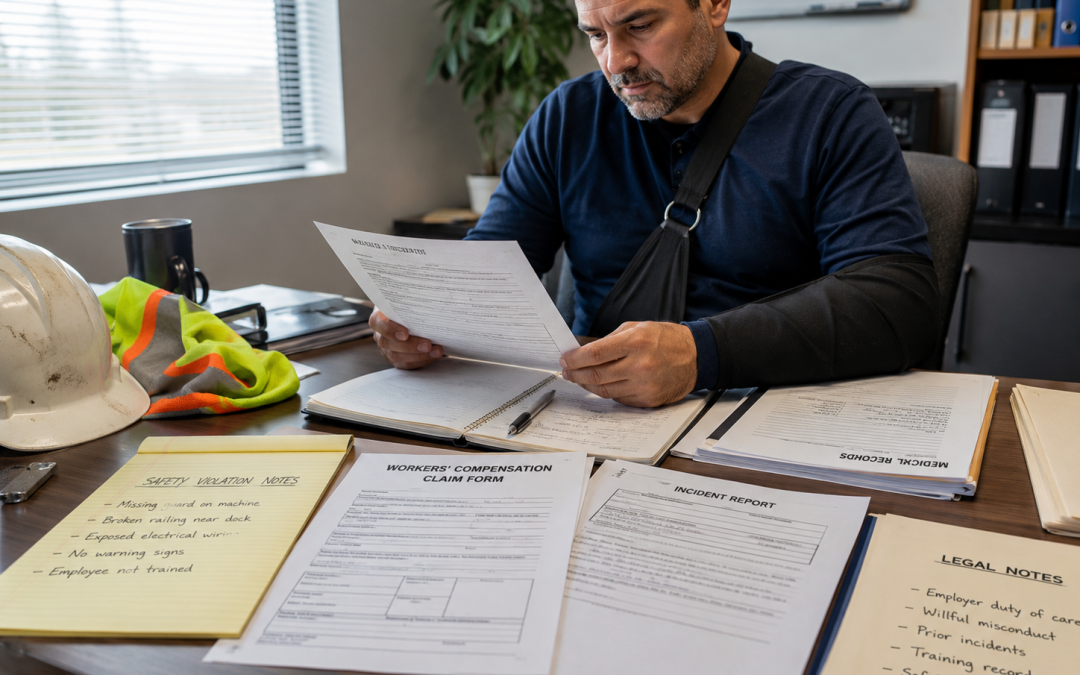
Willful misconduct in California often comes up in workers’ compensation cases after a serious workplace injury. In this context, the issue is usually whether the employer or employee acted with “serious and willful misconduct.”
This is more than ordinary negligence. A mistake, poor judgment, or unsafe condition may not be enough by itself. Serious and willful misconduct usually involves intentional conduct, reckless disregard, or a known safety risk that someone ignored.
What Does Willful Misconduct Mean?
California workers’ compensation law uses the phrase “serious and willful misconduct” in specific situations. The term can apply to an employer, an employer representative, or an injured employee.
In plain English, serious and willful misconduct means conduct more serious than carelessness. It may involve a known danger, a deliberate safety violation, or a reckless failure to act when serious injury could likely result.
For example, an employer may face a serious and willful claim if management knew a machine lacked required guarding, understood the risk, and still required employees to use it. On the other hand, a simple accident or isolated mistake may not meet the standard.
Employer Serious and Willful Misconduct
California Labor Code Section 4553 allows workers’ compensation to increase by one-half when an employee suffers injury because of serious and willful misconduct by the employer, a managing representative, or another qualifying person.
This increase can matter in serious injury cases. It may apply on top of ordinary workers’ compensation benefits, although the law also limits certain costs and expenses.
An employer serious and willful misconduct claim often focuses on what the employer knew before the injury. Evidence may show prior complaints, previous accidents, safety citations, ignored warnings, missing guards, broken equipment, or management instructions that exposed workers to known danger.
Employee Serious and Willful Misconduct
California law can also reduce compensation when the injured employee caused the injury through serious and willful misconduct. Under Labor Code Section 4551, compensation may be reduced by one-half when the employee’s serious and willful misconduct caused the injury, subject to statutory exceptions.
Those exceptions matter. The reduction does not apply in certain situations, including when the injury caused death, permanent disability of 70 percent or more, or when the employer failed to comply with a safety law or Cal/OSHA safety order.
This means an employer cannot always blame the injured worker and reduce benefits. The facts, safety rules, and cause of injury must be reviewed carefully.
Safety Order Violations
Many serious and willful misconduct claims involve workplace safety rules. California Labor Code Section 4553.1 sets requirements when an employer serious and willful misconduct claim relies on violation of a safety order.
The Workers’ Compensation Appeals Board must make specific findings. Those findings may include the specific safety order, the way the order was violated, and whether the employer or a qualifying representative knew about the safety order and the conditions that made it apply.
The law may also consider whether the dangerous condition was obvious, created a probability of serious injury, and whether failing to correct it showed reckless disregard for the likely consequences. Therefore, a strong claim usually needs more than a general statement that the workplace was unsafe.
How These Claims Are Filed
A serious and willful misconduct claim requires a separate petition. California’s Title 8 Section 10525 states that claims involving serious and willful misconduct by either the employer or employee must be separately pleaded and must explain the specific basis for the claim in sufficient detail.
If the claim relies on a safety order violation, the petition must include the correct citation or reference and the details required by Labor Code Section 4553.1.
This pleading rule is important. A vague allegation may not give the court enough information. The petition should identify the conduct, who committed it, what safety rule applied, what the person knew, and how the conduct caused the injury.
Evidence That May Help
Evidence often decides whether a serious and willful misconduct claim survives. The injured worker or employer may need records that show knowledge, warnings, safety violations, or reckless conduct.
Helpful evidence may include:
- Incident reports
- Cal/OSHA records
- Safety orders or citations
- Photos or video of the hazard
- Maintenance logs
- Prior injury reports
- Employee complaints
- Supervisor emails or texts
- Training records
- Witness statements
- Medical records
- Job hazard analyses
- Equipment inspection records
- Written timeline of events
Timing matters. Records showing repeated warnings before the injury can be especially important. By contrast, evidence created only after the incident may not prove the employer knew about the danger beforehand.
Willful Misconduct vs. Ordinary Negligence
Ordinary negligence may involve a failure to use reasonable care. Serious and willful misconduct requires more. The difference often turns on knowledge and disregard of risk.
For example, a supervisor who forgets to inspect a tool may have acted negligently. However, a supervisor who receives repeated warnings about a dangerous machine, refuses to shut it down, and orders employees to keep using it may create a stronger serious and willful issue.
The same distinction can apply to employee conduct. A worker who makes a mistake may not commit serious and willful misconduct. However, a worker who knowingly removes a safety device, ignores direct safety orders, and creates a serious risk may face a different analysis.
FAQs About Willful Misconduct in California
What is serious and willful misconduct in California workers’ compensation?
Serious and willful misconduct usually means conduct more severe than negligence. It often involves intentional wrongdoing, reckless disregard, or knowingly ignoring a serious safety risk.
Can workers’ compensation increase because of employer misconduct?
Yes. Labor Code Section 4553 allows a 50 percent increase in compensation when an employee suffers injury because of serious and willful misconduct by the employer or a qualifying representative.
Can employee misconduct reduce workers’ compensation benefits?
Sometimes. Labor Code Section 4551 allows a 50 percent reduction when the employee’s serious and willful misconduct caused the injury. However, important exceptions can prevent the reduction.
Does every safety violation count as willful misconduct?
No. A safety violation may support a claim, but the evidence must meet the legal requirements. The claim often needs proof of the safety order, violation, knowledge, serious risk, and causation.
Legal Help With Willful Misconduct Issues
A willful misconduct issue can affect workers’ compensation benefits, injury evidence, employer defenses, safety records, Cal/OSHA issues, and settlement strategy. A strong next step often depends on the safety rule involved, who knew about the risk, what warnings existed, and how the injury happened.
Her Lawyer, A Professional Law Corporation, assists with California workplace injury and employment-related matters involving serious workplace harm, safety violations, and workers’ compensation issues. Contact Her Lawyer to request a confidential consultation and discuss possible next steps.