
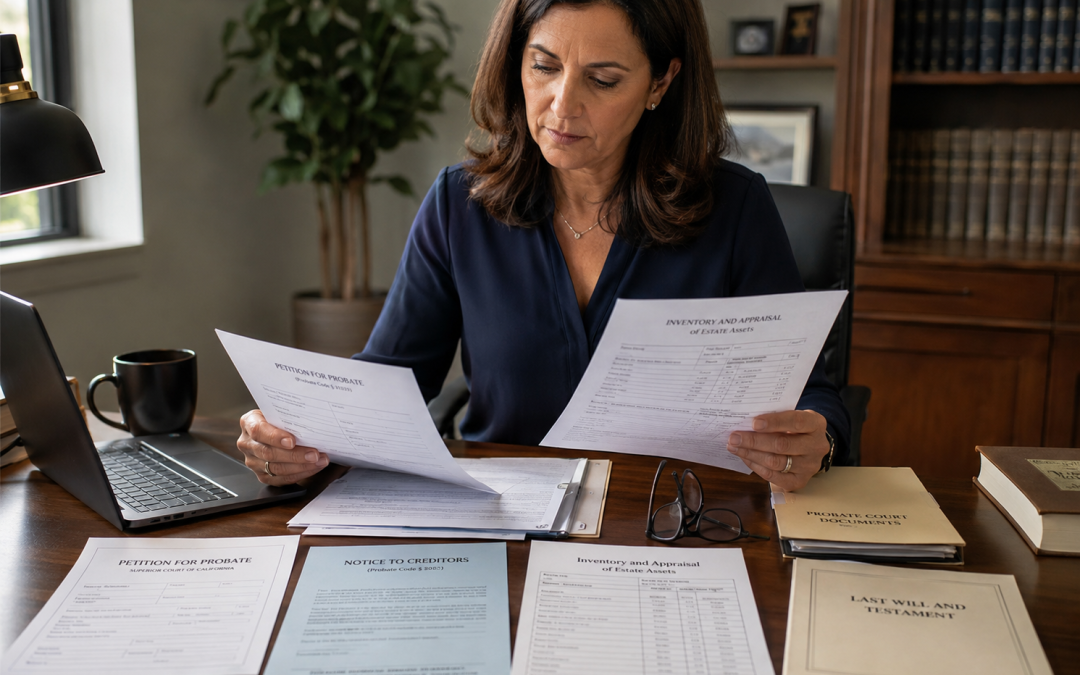
California probate is the court process for handling certain property after someone dies. Probate may involve validating a will, appointing someone to manage the estate, identifying assets, paying debts, giving required notices, and distributing property to heirs or beneficiaries.
Not every estate needs formal probate. Some property passes outside probate through a living trust, joint ownership, beneficiary designation, payable-on-death account, transfer-on-death registration, or small estate procedure. Because of that, the first step is usually to identify what property exists and how each asset is titled.
What Is Probate?
Probate is a court-supervised process for transferring property after death and settling the financial affairs of the person who died. California Courts defines probate as the court process for distributing assets, paying debts, and settling financial affairs after someone dies through its probate terms guide.
The person who died is often called the decedent. The person appointed by the court to manage the estate is called the personal representative. If the decedent had a will, the personal representative may be called the executor. If there is no will, the person may be called the administrator.
A probate case can be straightforward or contested. The process may become more complicated when family members disagree, assets are hard to value, creditors make claims, real estate must be sold, or the will is challenged.
When Is Probate Needed in California?
Formal probate may be needed when a person dies owning assets in their name alone and those assets do not transfer automatically. Real estate, bank accounts, vehicles, investment accounts, and personal property may require review.
California Courts explains that probate may be needed to transfer property after someone dies, but not every estate requires a formal probate case. The court’s property after someone dies guide explains that some estates can use simpler transfer procedures.
Probate may not be needed for assets that pass through:
- Living trust
- Joint tenancy
- Community property with right of survivorship
- Payable-on-death account
- Transfer-on-death registration
- Life insurance beneficiary
- Retirement account beneficiary
- Small estate affidavit
- Court-approved simplified transfer process
A will alone does not avoid probate. A will tells the court who should receive probate assets, but the estate may still need court administration.
Starting a Probate Case
To start formal probate, someone files court forms in the proper California county. California Courts explains that formal probate generally begins by filing a Petition for Probate, Form DE-111, along with other required court forms.
The petition asks the court to appoint a personal representative. If the decedent lived in California, the case is usually filed in the county where the decedent lived. If the decedent lived outside California but owned California property, the case may be filed in the California county where the property is located.
After filing, the court sets a hearing. Notice must usually be given to heirs, beneficiaries, and other interested people. The court may then decide who should serve as personal representative and whether the will should be admitted to probate.
Duties of the Personal Representative
The personal representative has legal duties during probate. This person must manage the estate carefully, follow court orders, protect estate property, communicate with interested parties, and avoid self-dealing.
Common duties may include:
- Locate the will
- File probate court forms
- Notify heirs and beneficiaries
- Identify estate assets
- Secure estate property
- Open an estate bank account
- Prepare an inventory and appraisal
- Notify creditors
- Pay valid debts and expenses
- Handle tax issues
- Request court approval when needed
- Distribute remaining property
- File final reports or accounting
California Courts notes that probate courts usually require a report about one year after the personal representative is appointed through its formal probate overview.
Estate Inventory and Appraisal
A key part of probate is identifying and valuing estate property. The personal representative usually prepares an inventory and appraisal so the court, beneficiaries, and creditors can understand what the estate owns.
Estate assets may include:
- Real estate
- Bank accounts
- Vehicles
- Investment accounts
- Business interests
- Personal property
- Jewelry
- Household items
- Refunds or claims owed to the decedent
- Digital or intellectual property assets
Some property may require appraisal by a probate referee. Accurate valuation can affect creditor payments, distributions, taxes, sale decisions, and whether a simpler estate procedure is available.
Debts, Creditors, and Expenses
Probate also deals with debts and expenses. The personal representative may need to notify creditors, review creditor claims, pay valid debts, and reject improper claims when appropriate.
Estate expenses may include:
- Funeral or burial expenses
- Court filing fees
- Appraisal fees
- Property maintenance
- Taxes
- Mortgage payments
- Insurance
- Creditor claims
- Professional fees, when approved or allowed
Beneficiaries usually do not receive final distributions until debts, expenses, and administration issues are handled. If the estate has more debts than assets, payment priority rules may matter.
Small Estate Procedures
California allows simpler transfer procedures for some smaller estates. These procedures may help avoid formal probate when the estate meets the legal requirements.
California Courts explains that formal probate may not be needed when the estate qualifies for simpler summary succession procedures. The court also notes that a 2025 law raised the limit for certain California primary residence transfers to $750,000.
For some personal property, California Probate Code Section 13100 allows a successor to collect or transfer qualifying property by affidavit when the statutory value limit is met and at least 40 days have passed since death.
Small estate rules can be technical. The type of property, total value, waiting period, and required documents all matter.
Will, Trust, and Non-Probate Transfers
A will controls probate property, but it may not control every asset. For example, a retirement account beneficiary designation may override what the will says about that account.
A living trust may help avoid formal probate if assets are properly transferred into the trust before death. However, property left outside the trust may still require probate unless it qualifies for another transfer method.
Non-probate transfers may include:
- Trust assets
- Jointly owned property
- Beneficiary-designated accounts
- Life insurance proceeds
- Retirement accounts
- Payable-on-death accounts
- Transfer-on-death securities
- Certain vehicles or small estate transfers
For that reason, probate planning often requires reviewing both estate documents and asset titles.
Probate Disputes
Probate disputes can arise when family members, beneficiaries, creditors, or fiduciaries disagree. These disputes may delay administration and increase estate costs.
Common probate disputes include:
- Will contests
- Executor disputes
- Beneficiary disputes
- Creditor claim disputes
- Allegations of undue influence
- Lack of capacity claims
- Missing asset issues
- Accounting objections
- Trustee or executor misconduct
- Disagreements over real estate sales
- Heirship disputes
Evidence may include estate planning documents, medical records, financial records, emails, text messages, witness statements, property records, and prior versions of a will or trust.
FAQs About California Probate
Does every estate need probate in California?
No. Some estates avoid formal probate through trusts, joint ownership, beneficiary designations, small estate procedures, or other transfer methods.
Does having a will avoid probate?
No. A will can direct who receives probate property, but a will alone does not avoid probate.
Who handles probate in California?
The court appoints a personal representative. If there is a will, that person is often called the executor. If there is no will, the person is often called the administrator.
How does formal probate start?
Formal probate usually starts by filing a Petition for Probate, Form DE-111, in the proper California probate court.
Legal Help With California Probate
California probate can affect estate assets, debts, beneficiaries, real estate, family disputes, court filings, and final inheritance. A strong next step often depends on whether the decedent had a will or trust, how the assets are titled, the estate value, creditor issues, and whether formal probate is required.
Her Lawyer, A Professional Law Corporation, assists with California family law and estate-related matters involving probate, wills, trusts, inheritance, estate administration, and related disputes. Contact Her Lawyer to request a confidential consultation and discuss possible next steps.