
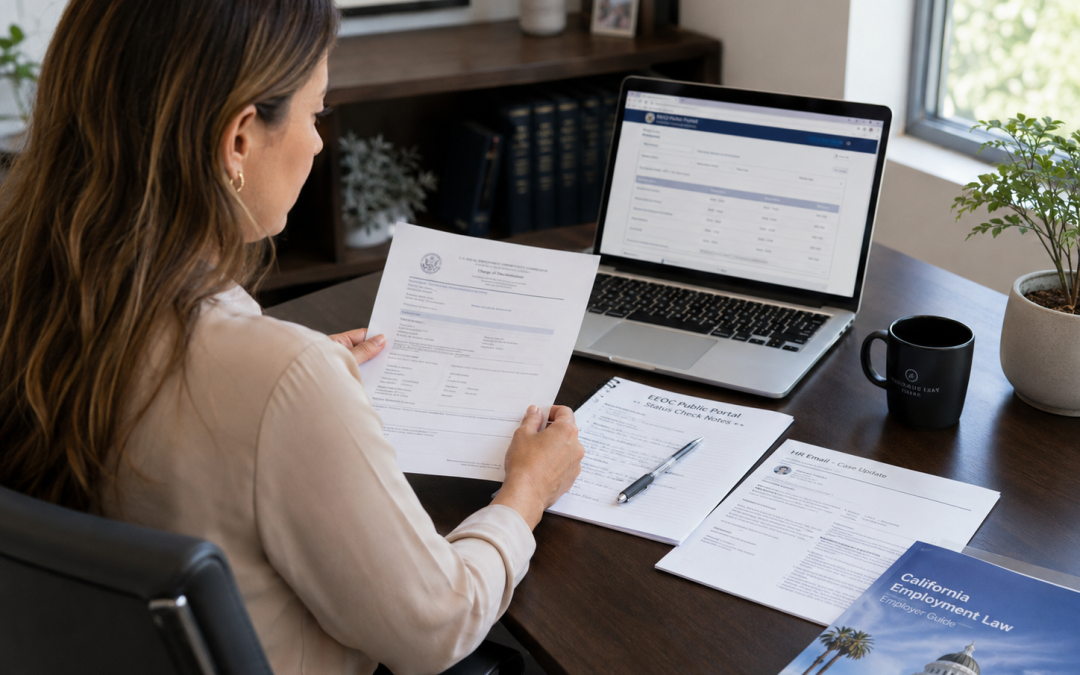
A person can check the status of an EEOC charge in California through the EEOC Public Portal, the EEOC Online Charge Status System, or by contacting the assigned EEOC office. The status may show whether the charge is pending, in mediation, under investigation, awaiting employer response, closed, or ready for next steps.
An EEOC charge can take time. The process may involve intake, notice to the employer, mediation, investigation, document requests, position statements, settlement discussions, dismissal, a cause finding, or a right-to-sue notice. Checking the status helps the charging party understand where the case stands and whether the EEOC needs more information.
What Is an EEOC Charge?
An EEOC charge is a formal complaint asking the U.S. Equal Employment Opportunity Commission to review possible workplace discrimination, harassment, or retaliation. The EEOC states that a person may file a charge after workplace discrimination based on race, color, religion, sex, pregnancy, transgender status, sexual orientation, national origin, age 40 or older, disability, or genetic information.
Federal law generally requires a person to file an EEOC charge before filing many discrimination lawsuits in court. The EEOC explains that laws it enforces, except the Equal Pay Act, generally require filing a charge before a private lawsuit may be filed.
In California, employment discrimination issues may also involve the California Civil Rights Department, often called CRD. CRD enforces state civil rights laws involving employment discrimination, harassment, and retaliation.
How to Check EEOC Charge Status Online
The EEOC allows charging parties to check charge status online. The EEOC’s charge status tip sheet explains that a person can access the Online Charge Status System through the EEOC Public Portal or through the “How to Check the Status of a Charge” link on the EEOC website.
A person may need:
- EEOC charge number
- Charging party information
- Login credentials
- Email used for the portal
- Security verification information
The EEOC also states that charging parties can access charge information through the EEOC Public Portal and check charge status through the Online Charge Status System.
If the portal does not show enough detail, the charging party may contact the EEOC office handling the charge. The assigned investigator or office may provide updates, request documents, or explain what step comes next.
Common EEOC Charge Status Updates
An EEOC charge status may not always give a full explanation. Still, the status can help identify the stage of the case.
Common stages may include:
- Charge filed
- Notice sent to employer
- Awaiting employer position statement
- Mediation offered
- Mediation scheduled
- Investigation pending
- Investigation in progress
- Additional information requested
- Settlement discussion
- Closed
- Dismissal and notice of rights issued
- Determination issued
A status update does not always mean the EEOC has decided whether discrimination happened. For example, a pending investigation only means the agency is still reviewing the matter. A mediation referral does not mean either side admitted wrongdoing.
What Happens After an EEOC Charge Is Filed?
After a charge is filed, the EEOC may notify the employer, invite the parties to mediate, request a position statement, investigate documents, interview witnesses, or ask the charging party for more information. The EEOC’s post-charge guidance says a person may access charge information through the Public Portal after filing a charge.
The employer may submit a position statement explaining its response. The charging party may receive an opportunity to reply. Documents can matter at this stage because the EEOC may review timelines, emails, HR complaints, discipline records, witness information, pay records, leave records, or accommodation documents.
If the EEOC closes the charge, it may issue a notice of right to sue. That notice can start a deadline to file a lawsuit, so the charging party should review it carefully.
EEOC Mediation Status
Some charges may go to mediation. Mediation is a voluntary process where a neutral mediator helps both sides discuss possible resolution.
A charge may show a mediation-related status if the EEOC offers mediation, schedules a session, or waits for party responses. Mediation does not stop a person from taking the charge seriously. The charging party should still preserve records and prepare the facts.
Helpful mediation materials may include:
- Charge of discrimination
- Timeline of events
- Termination or discipline records
- HR complaints
- Emails or texts
- Pay records
- Medical or accommodation records
- Witness names
- Desired resolution
If mediation fails, the EEOC may continue investigating the charge.
EEOC vs. California Civil Rights Department Status
California workers may deal with the EEOC, CRD, or both. The correct agency path depends on the claims, filing strategy, deadlines, and whether the case is dual-filed.
CRD explains that if it accepts a case, it independently investigates the facts and legal issues. CRD also notes that filing a complaint does not usually mean the agency has already decided whether there is reasonable cause to believe a civil rights law was violated.
To check the status of a pending CRD complaint, CRD instructs people to contact the investigator assigned to the case. For a pending appeal, CRD lists the Appeals Unit email.
This distinction matters. An EEOC Public Portal update may not show every CRD update, and a CRD complaint status may not appear in the EEOC system.
What If the EEOC Charge Is Delayed?
EEOC investigations can take time. A delay may happen because the agency is waiting for an employer response, reviewing documents, scheduling mediation, assigning an investigator, or handling a large caseload.
A charging party can use the waiting period to organize the case. Helpful steps may include:
- Save the EEOC charge number
- Download portal notices
- Keep copies of uploaded documents
- Track all agency deadlines
- Save employer communications
- Update contact information
- Respond quickly to EEOC requests
- Preserve HR complaints and personnel records
- Keep a timeline of events
A charging party should not assume silence means the case is over. However, if a deadline is approaching or a lawsuit deadline may apply, the person should seek legal guidance promptly.
Evidence to Keep While the Charge Is Pending
Evidence can affect the EEOC process, settlement, and later legal claims. The charging party should preserve documents in a lawful way and avoid taking confidential company files.
Helpful evidence may include:
- EEOC charge
- EEOC portal messages
- Employer position statement
- HR complaints
- Emails and texts
- Performance reviews
- Disciplinary notices
- Termination notice
- Pay records
- Schedule records
- Accommodation requests
- Leave records
- Witness names
- Written timeline
The timeline should include dates, people involved, protected complaint or status, employer response, and any adverse action. A clear timeline can make the charge easier to understand.
FAQs About EEOC Charge Status in California
How can someone check an EEOC charge status in California?
A charging party can check status through the EEOC Public Portal or the EEOC Online Charge Status System. The person may also contact the EEOC office handling the charge.
What information is needed to check EEOC charge status?
The charging party may need the EEOC charge number, portal login information, email address, and identifying information connected to the charge.
Does a pending EEOC charge mean the EEOC found discrimination?
No. A pending charge means the EEOC has not finished processing or investigating the charge. It does not automatically prove discrimination occurred.
Can a California worker also file with CRD?
Sometimes. California employment discrimination claims may involve CRD, the EEOC, or both. The right path depends on the claims, deadlines, and filing strategy.
Legal Help With EEOC Charge Status
An EEOC charge can affect workplace discrimination claims, retaliation issues, settlement discussions, right-to-sue deadlines, agency filings, and future litigation options. A strong next step often depends on the charge status, agency notices, employer response, evidence, deadlines, and whether the matter also involves CRD.
Her Lawyer, A Professional Law Corporation, assists with California employment matters involving EEOC charges, discrimination, harassment, retaliation, wrongful termination, and workplace rights. Contact Her Lawyer to request a confidential consultation and discuss possible next steps.