
What Happens If Your Spouse Does Not Show Up for Divorce Court in California?
If a spouse does not show up for divorce court in California, the case may still continue. The consequences depend on whether the spouse never responded to the divorce petition or filed a response but later missed a hearing.
California does not require both spouses to agree to a divorce. One spouse cannot prevent the marriage from ending by refusing to participate. However, the filing spouse must still follow the required procedures and obtain a final judgment from the court.
No Response and a Missed Hearing Are Different
A spouse who does not respond to the initial divorce papers may face a default. A default allows the court to decide the case without receiving that spouse’s position.
A spouse who files a response but later misses a hearing generally remains a participating party. The court may proceed without the absent spouse, continue the hearing, or issue appropriate orders based on the documents and evidence presented.
Her Lawyer’s California divorce FAQs provide more information about filing, service, property division, and other parts of the divorce process.
What Happens If a Spouse Does Not Respond?
After being properly served, the respondent generally has 30 days to file a Response with the court. The California Courts website provides the commonly used divorce response forms, including Form FL-120.
If the respondent does not file within the required period, the petitioner may ask the court to enter a default. This means the judge may decide the divorce without hearing from the respondent.
A default does not automatically end the marriage. The petitioner must still complete financial disclosures, request the default, prepare the judgment documents, and submit the final paperwork for judicial review.
The judge may address matters such as property division, debts, child custody, child support, spousal support, and attorney’s fees. The petitioner does not automatically receive everything requested. The proposed orders must still comply with California law and remain within the requests made in the divorce petition.
In some cases, the respondent does not file a formal response but signs a written settlement agreement. The spouses may then complete the divorce through a default with agreement.
What Happens If a Spouse Misses a Divorce Hearing?
When a spouse has already participated in the divorce but misses a scheduled hearing, the case does not automatically become a default.
The judge may consider whether the spouse received proper notice and whether the required documents were filed. Depending on the circumstances, the court may proceed with the hearing or reschedule it.
A missed hearing may affect decisions involving:
- Child custody and parenting time
- Child or spousal support
- Use of the family home
- Property-related orders
- Attorney’s fees
- Compliance with earlier court orders
The attending spouse must still provide enough evidence to support the requested orders. The judge does not have to approve a request simply because the other spouse is absent.
A spouse who misses a hearing may also lose the opportunity to testify, respond to evidence, or explain a position directly to the judge.
California Divorce Procedures
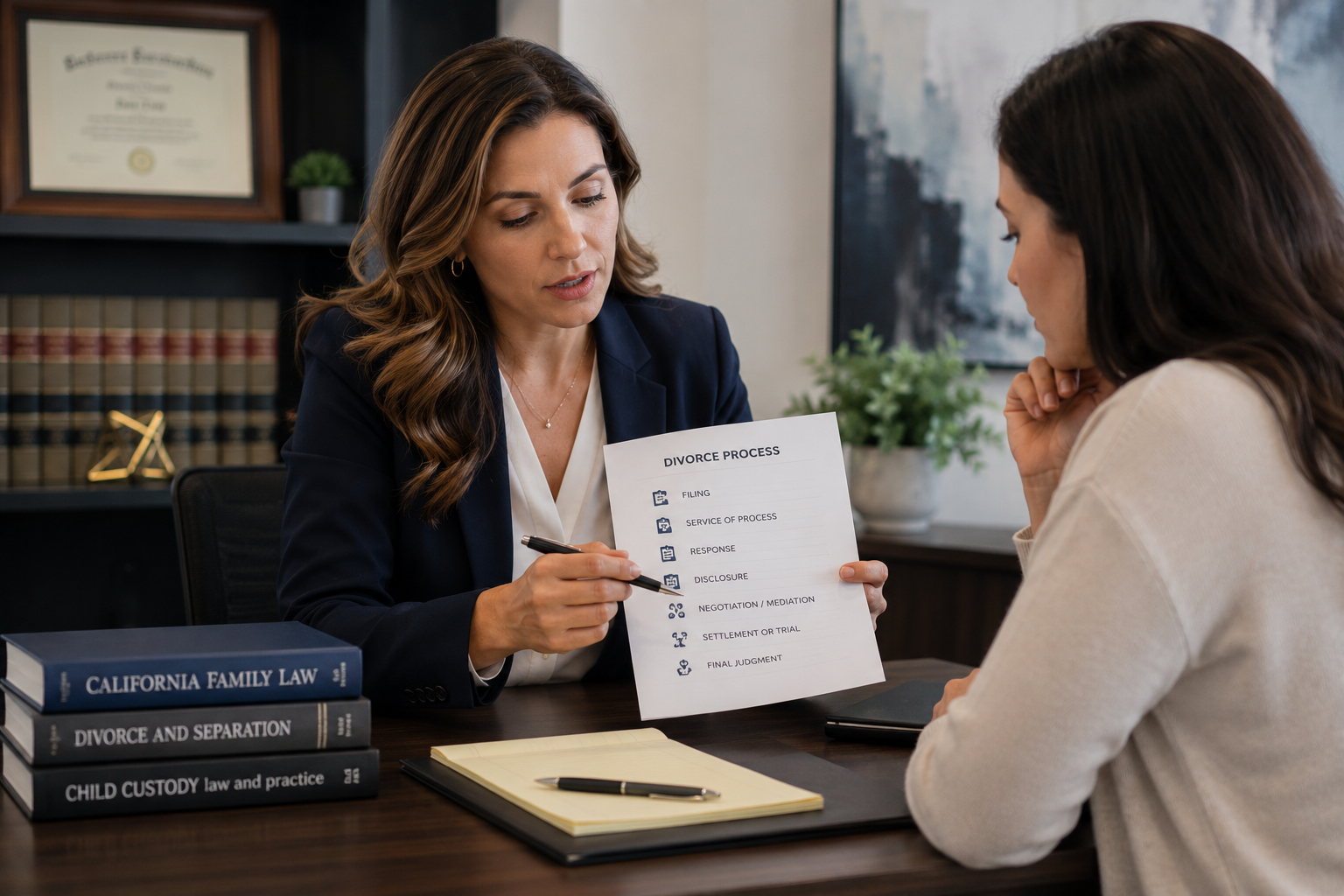
1. Meet the Residency Requirements
To file for divorce in California, either spouse generally must have lived in the state for at least six months and in the county of filing for at least three months.
2. File the Divorce Petition
The spouse who starts the case is called the petitioner. The other spouse is called the respondent. These labels identify the parties but do not give either spouse greater legal rights.
The filing date does not automatically become the date of separation. That date generally depends on when one spouse expressed an intent to end the marriage and acted consistently with that intent.
3. Serve the Other Spouse
The respondent must receive formal notice that the divorce case has started. The petitioner cannot personally serve the initial divorce papers. Another adult who is at least 18 and not involved in the case must complete service.
The server must then complete a Proof of Service of Summons. The court generally cannot move forward until that document has been filed.
4. Wait for a Response
The respondent generally has 30 days after service to file a response. If that period passes without a response, the petitioner may request a default.
When the deadline has passed but no default has been entered, the respondent may still be able to file the response. Once default is entered, court permission may be necessary before the respondent can participate.
5. Resolve the Divorce Issues
The spouses may resolve property, debts, custody, support, and other issues through a written agreement, mediation, settlement negotiations, or trial.
When the spouses cannot agree, the divorce becomes contested. Her Lawyer’s explanation of the difference between contested and uncontested divorce discusses how each type of case proceeds.
6. Obtain a Final Judgment
A California divorce takes at least six months, but it does not automatically become final when that period ends. The waiting period generally begins when the respondent is served or first appears in the case, not when the petition is filed.
The judge must review and sign the judgment. The judgment states the date on which the marriage legally ends.
Contested Divorce and Trial
A divorce is contested when the respondent participates but the spouses cannot agree on one or more issues. Disputes may involve property, debts, custody, support, or the date of separation.
Before trial, the spouses may attend mediation or a settlement conference. Each party must generally exchange final financial disclosures at least 45 days before the first scheduled trial date unless the disclosures are properly waived.
Common disclosure documents include:
- Declaration of Disclosure
- Schedule of Assets and Debts or Property Declaration
- Income and Expense Declaration
- Declaration Regarding Service of Declaration of Disclosure
If one spouse does not attend the scheduled trial, the judge may consider the evidence presented by the spouse who appears.
FAQs About Missing Divorce Court in California
Can a California divorce continue without the other spouse?
Yes. A spouse’s consent is not required to end the marriage. The filing spouse must still complete service, disclosures, default procedures, and final judgment paperwork.
Is a divorce automatic when a spouse does not respond?
No. The petitioner must request a default and submit the required documents for the judge’s review.
Does the petitioner automatically receive everything requested?
No. The court reviews the requests and applies California law before entering orders or judgment.
Is a California divorce final six months after filing?
No. The waiting period generally begins after service or the respondent’s first appearance. The marriage ends only after the judge signs the judgment.
Can a spouse challenge a default?
A spouse may ask the court to set aside a default or judgment under limited circumstances. Filing deadlines and specific legal grounds may apply.
Speak With a California Divorce Attorney
A missed response or court appearance may significantly affect a California divorce. Proper service, financial disclosures, court notices, and final paperwork remain necessary even when one spouse does not participate.
Her Lawyer, A Professional Law Corporation, can explain how a spouse’s absence may affect the next stage of a divorce case. Contact Her Lawyer to request a consultation.