
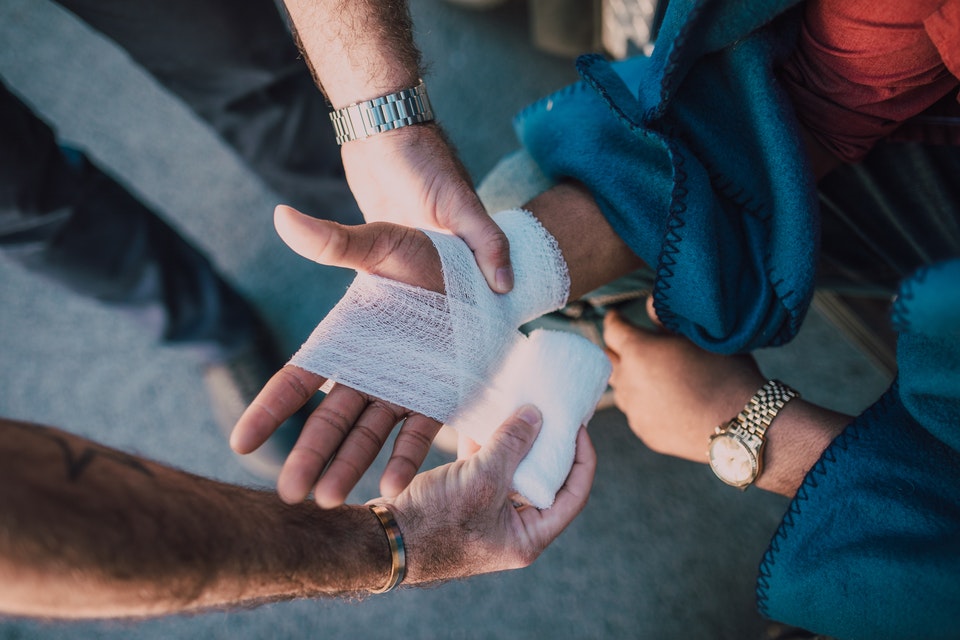
Proving Injuries Sustained in Car Accidents
Traumatic injuries from car accidents can be immediately recognizable on the body or have persistent residual effects. Here’s what to know about how to prove injury from a car accident.
Proving an injury results from a car accident is necessary in a personal injury lawsuit, which requires detailed records and a consultation with an attorney.
Actions to Take After Sustaining a Car Accident Injury
The manner in which a car accident injury is handled immediately after the accident is crucial. Injury victims should not disclose anything about their health or pain severity to the defendant. A victim’s simple acknowledgement of being alright could be considered a res gestae statement and found admissible in court.
Documentation of symptoms and injuries should begin directly after an accident. The testifying physician should give a detailed account of all symptoms for an accurate assessment and the diagnosis of less obvious injuries. Reported symptoms and injuries are also useful for the physician’s record.
While it is common to speak to the insurance companies of both drivers following an accident, insurance companies often record statements as evidence for a lawsuit. Although speaking to your own insurance company is necessary, do not disclose too much without receiving specifics from doctors or police officers. Consult with an experienced attorney from Her lawyer before relaying information to the insurance company of the driver at fault for the collision.
Related: Who’s At Fault in Pile-Up Accidents?
Proving Driver Negligence in a Car Accident Injury Lawsuit
An initial step in proving injuries from a car accident is consulting with an attorney. After a car accident, one should not only prove consequential injuries and financial losses, but also driver negligence.
Each driver has a duty to operate their vehicle in a safe manner. If a driver causes an accident and resulting injuries, they can be proved negligent. Examples of driver negligence include:
- Reckless driving
- Speeding
- Failure to obey traffic signals
- Failure to signal
- Failure to yield right-of-way
- Driving under the influence
- Aggressive driving
If neither driver is found to be fully at fault, many states rely on comparative negligence. Using comparative negligence, a jury will decide the percentage of fault for each driver. The percentage of fault will then be deducted from the plaintiff’s awarded damages.
Evidence to Prove an Injury is From a Car Accident
In the event that a personal injury lawsuit goes to court, the burden of proof is set on the plaintiff. The plaintiff must prove their injury and damages, as well as the fault of the defendant. Evidence from the scene such as:
- Police reports
- The other driver’s information
- Photos
- Statements
- Record of the surrounding area
- Record of the condition of the vehicles
Record evidence relating to the collision. Additional evidence can include:
- Medical records
- Medical bills
- Diagnostic Images
- Documentation of healthcare appointments
- Physicians consulted
- Treatment obtained
- Lost wages
Related: What Happens When Your Car is Totaled?
Approaching Injuries Insurance Companies Question
Insurance companies often question common injuries to discredit the victim’s injuries from the car accident. Certain factors, such as the severity of the accident, the damage of the vehicle, and the speed or conditions of the collision can be used to prevent insurance companies from questioning injuries. One should keep a record to diminish questioning.
Factors Affecting a Car Accident Injury Case
Defendants may also use personal factors about a plaintiff to discredit injury symptoms such as age, body mass index, or pre-existing injuries and medical conditions.
A personal injury attorney can use medical records to prove the origin of the injuries. One may bring in a medical expert witness, who is a doctor who has never treated the victim, to interpret the plaintiff’s medical records in support of the previous physicians.
Past and present medical records can be compared to prove that a pre-existing condition has worsened as a result of the accident.
FAQs About Proving an Injury Is From a Car Accident
What is the burden of proof?
The burden of proof rests on the plaintiff or the person proving the case. The plaintiff has the burden of proving the claims.
What is comparative negligence?
Comparative negligence is used in some states when the fault of an accident cannot be placed on one participant. A jury is used to find each participant’s percentage of fault. The percentage is used to reduce or nullify the plaintiff’s award for damages in a lawsuit.
What is a res gestae statement?
A res gestae statement is a statement relating to a lawsuit or case that is admissible in a court of law.
Are car accident injuries limited to immediate injuries?
Injuries from car accidents can be immediately recognizable or present as residual effects.
What could be a residual effect from a car accident injury?
A residual injury can result from a car accident as an injury with a permanent or long-lasting effect on a patient. A residual injury can present as a symptom that persists after the treatment of the original injury.
How does a victim prove injuries are not from a pre-existing condition?
A victim can use medical records and a medical expert witness to prove the origin of car accident injuries.
What if car accident injuries worsen a pre-existing condition?
If a defendant proves a pre-existing condition relating to injuries sustained in a car accident, the plaintiff’s claims may not be fully discredited. A comparison of past and present medical records can be used to prove that a pre-existing condition has worsened as a result of the accident.
What kind of evidence is important to keep?
Evidence from the scene and after an accident are both important to keep to prove damages for a lawsuit. A record of the scene, witnesses, medical records, and lost wages are all important to insure appropriate compensation.
Contact Us
If you or a loved one would like to learn more about how to prove injury in a car accident, get your free consultation with one of our personal injury attorneys in California today!