
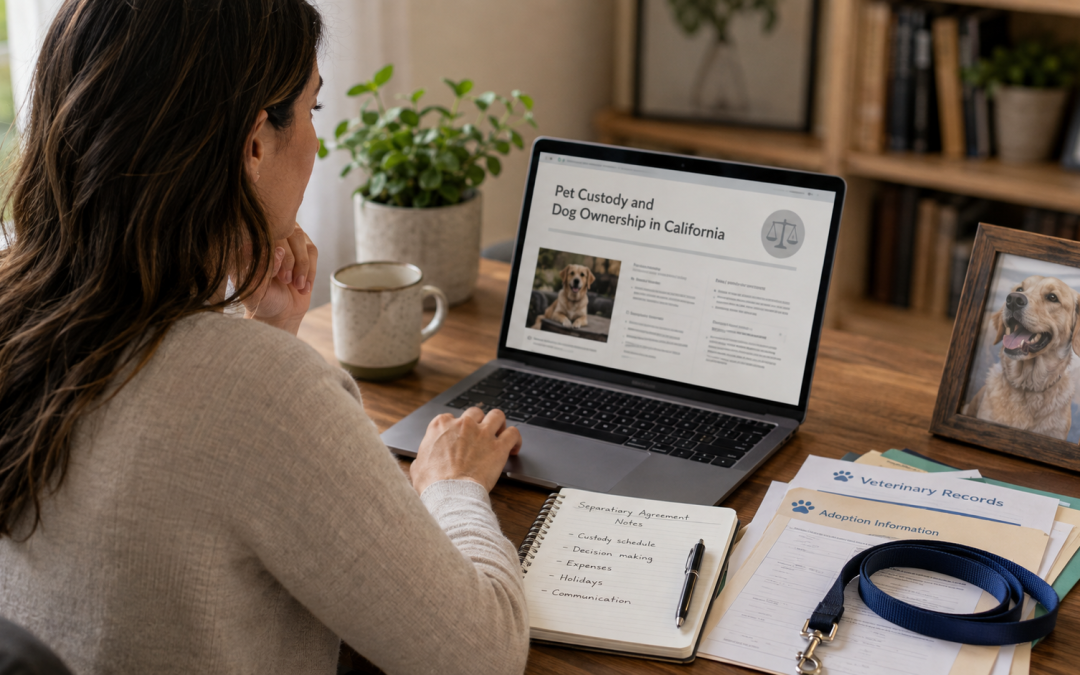
Pet custody after a breakup can become emotional quickly. A dog may feel like family, but California law does not treat pet custody exactly like child custody. The legal answer often depends on whether the couple was married, whether a divorce or legal separation case exists, who owns the dog, and who provided most of the pet’s care.
California courts have specific authority to consider pet care in divorce and legal separation cases. Outside divorce or legal separation, a pet dispute may look more like a property or ownership issue.
Pet Custody in California Divorce or Legal Separation
California law allows courts to make certain orders about pet animals in divorce or legal separation cases. Under Family Code Section 2605, a court may enter an order before final ownership is decided requiring a party to care for the pet animal.
The same law allows a court, at a party’s request, to assign sole or joint ownership of a pet animal while considering the care of the pet animal. This rule applies in proceedings for dissolution of marriage or legal separation.
This means a California family court may look beyond whose name appears on one receipt. The court may consider who feeds the dog, takes the dog to veterinary appointments, pays expenses, provides daily care, and maintains the dog’s routine.
Are Pets Treated Like Children?
No. California pet custody is not the same as child custody. Courts do not apply the child’s best interest standard to pets in the same way they do for children.
However, California law does allow the court to consider the pet’s care when assigning sole or joint ownership in divorce or legal separation. This creates a more flexible approach than treating the dog only as ordinary property.
For example, a court may review who has handled daily walks, food, grooming, medical appointments, training, medication, and general care. A judge may also consider whether one spouse can provide a safe and stable home for the dog.
Who Keeps the Dog After an Unmarried Breakup?
An unmarried breakup can be more complicated. Family Code Section 2605 applies to divorce and legal separation, not every dating relationship or roommate breakup.
When unmarried partners separate, the dog may be treated more like personal property. Ownership evidence may matter more, including adoption papers, purchase records, microchip registration, veterinary records, licensing documents, and proof of payment.
Important ownership records may include:
- Adoption papers
- Purchase agreement
- Microchip registration
- Dog license
- Veterinary records
- Pet insurance policy
- Grooming records
- Training invoices
- Receipts for food or supplies
- Text messages about ownership
- Written breakup agreement
Still, informal care history can matter in practical negotiations. If one person clearly provided most of the care, paid most expenses, and maintained the dog’s routine, those facts may help support an agreement.
Sole Ownership vs. Shared Ownership
California divorce courts may assign sole or joint ownership of a pet. Sole ownership means one person keeps legal ownership of the dog. Joint ownership may allow both people to share ownership or create a schedule.
A shared pet arrangement may work when both people communicate well and the dog handles transitions safely. However, shared arrangements can create problems when the breakup is hostile, the dog has medical needs, or one person repeatedly ignores the agreement.
A pet agreement may address:
- Primary residence
- Exchange schedule
- Veterinary decisions
- Emergency care
- Food and medication
- Grooming expenses
- Pet insurance
- Travel
- Relocation
- End-of-life decisions
A clear written agreement can reduce conflict. It can also help both people understand expectations before future disputes arise.
Evidence That May Help a Pet Custody Dispute
Pet custody disputes often depend on records showing ownership and care. A person seeking to keep the dog should organize documents that show both legal ownership and practical caregiving.
Helpful evidence may include:
- Adoption or purchase records
- Veterinary bills
- Microchip records
- Dog license
- Pet insurance records
- Training receipts
- Grooming receipts
- Medication records
- Boarding or daycare records
- Photos showing care history
- Texts or emails about the dog
- Witness names
- Proof of daily care
- Records of unsafe conduct, if relevant
A short timeline can also help. It may show when the dog joined the household, who paid expenses, who handled care, and what happened after the breakup.
Can a Court Order Temporary Care of a Dog?
Yes, in a California divorce or legal separation case. Family Code Section 2605 allows the court to make an order before final ownership is decided requiring a party to care for the pet animal. The statute also allows courts to assign sole or joint ownership after considering care of the pet animal.
A temporary care order may matter when both spouses want the dog during the case. It may also matter when one spouse has moved out, refused access, or failed to care for the dog properly.
Outside divorce or legal separation, a court’s options may differ. An unmarried partner may need to rely on property, contract, civil dispute, or negotiation routes depending on the facts.
Practical Steps After a Breakup
A breakup involving a shared dog should be handled calmly when possible. The dog’s safety, routine, medical needs, and stability should remain central.
Practical steps may include:
- Gather ownership records
- Save veterinary and expense records
- Document daily care history
- Avoid taking the dog secretly
- Keep communication in writing
- Consider a written pet agreement
- Review any divorce or separation case
- Keep the dog’s medical needs current
If the dog is in immediate danger, animal welfare or emergency resources may be necessary. If domestic violence or coercive control is involved, the person should also consider safety planning and protective orders.
FAQs About Pet Custody After a Breakup
Who keeps the dog after a breakup in California?
The answer depends on whether the couple was married, whether a divorce or legal separation case exists, and who can show ownership or care history. In divorce or legal separation, a court may assign sole or joint ownership while considering care of the pet.
Can a California court order shared custody of a dog?
In divorce or legal separation cases, California law allows courts to assign sole or joint ownership of a pet animal. The court may consider who cared for the pet.
Does the person who paid for the dog always keep the dog?
Not always. Payment records can matter, but California family courts may also consider care history in divorce or legal separation cases. For unmarried couples, purchase and ownership records may carry more weight.
Can unmarried partners get pet custody orders?
Unmarried partners usually do not use the same family court pet custody rule unless another legal case applies. Their dispute may involve ownership records, written agreements, or civil property issues.
Legal Help With Pet Custody After a Breakup
Pet custody after a breakup can affect divorce negotiations, property division, emotional stability, and future conflict. A strong next step often depends on the relationship status, ownership documents, care history, expense records, and whether a divorce or legal separation case is pending.
Her Lawyer, A Professional Law Corporation, assists with California family law matters involving divorce, legal separation, property division, pet custody issues, and related disputes. Contact Her Lawyer to request a confidential consultation and discuss possible next steps.