
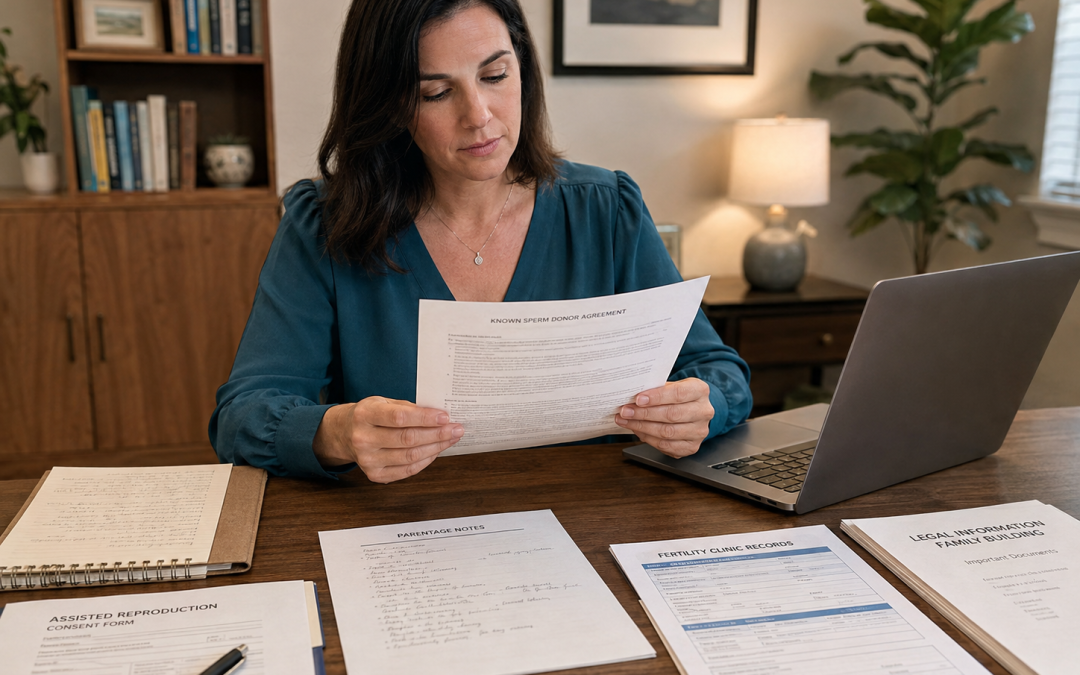
Known sperm donation in California can help intended parents conceive with sperm from someone they know, such as a friend or agreed donor. However, parentage should be handled carefully before conception. A clear written agreement can help show whether the donor will be a legal parent or only a donor.
California law gives families more flexibility than many states. Still, the details matter. The method of conception, timing of the agreement, use of a licensed physician or sperm bank, and the parties’ written intent can affect parental rights and responsibilities.
What Is a Known Sperm Donor?
A known sperm donor is someone who provides sperm for assisted reproduction and whose identity is known to the intended parent or parents. Unlike an anonymous sperm bank donor, a known donor may already have a personal relationship with the family.
A known donor may be a friend, acquaintance, relative of a partner, or other agreed person. Some families choose a known donor because they want medical history, future identity access, cultural connection, or a continued non-parent relationship with the child.
That arrangement can work well, but it should not rely only on trust. Parentage, contact, decision-making, expenses, privacy, and future boundaries should be discussed and documented before conception.
California Family Code Section 7613
California Family Code Section 7613 controls many assisted reproduction parentage issues involving sperm donation.
Under this statute, a sperm donor who provides semen to a licensed physician and surgeon or licensed sperm bank for assisted reproduction by a woman other than the donor’s spouse is treated as if the donor is not the child’s natural parent, unless the donor and the woman signed a written agreement before conception saying the donor would be a parent.
California law also addresses known donor situations outside a clinic setting. If conception happens through assisted reproduction without sexual intercourse, the donor may be treated as not being a parent when the donor and the person conceiving sign a written agreement before conception stating they intend to conceive through assisted reproduction and do not intend for the donor to be a parent.
Why a Written Agreement Matters
A written known donor agreement can help prevent disputes. It should clearly state whether the donor intends to be a legal parent or does not intend to be a legal parent.
The agreement should usually address:
- Donor intent
- Intended parent intent
- Method of conception
- Medical screening
- Fertility clinic or physician use
- Contact expectations
- Future communication
- Privacy
- Expenses
- Birth certificate expectations
- Parentage orders, if needed
A written agreement should be signed before conception. A later agreement may not solve parentage problems that already arose. If the donor wants parental rights, that intent should also appear clearly in a preconception written agreement.
California Assisted Reproduction Forms
California provides statutory forms for assisted reproduction. Under Family Code Section 7613.5, intended parents may use state forms to show intent to be legal parents of a child conceived through assisted reproduction.
These forms can help clarify intent, but they do not replace careful legal review in every case. The same statute explains that the forms do not affect certain parentage presumptions and do not prevent a court from considering other parentage claims under California law.
For known donor arrangements, the form language can help document that the donor is not intended to be a parent. However, facts such as sexual intercourse, unclear documents, conflicting conduct, or later disputes may complicate the analysis.
Clinic Donation vs. At-Home Insemination
The method of conception can matter. A known donor who provides sperm through a licensed physician or sperm bank may receive clearer statutory protection from parentage claims under Family Code Section 7613.
At-home insemination can still fit California’s assisted reproduction rules when the parties conceive without sexual intercourse and sign the proper preconception written agreement. However, at-home arrangements often create more room for disputes if the paperwork is incomplete or the parties later disagree about intent.
Sexual intercourse creates a different legal risk. A person who conceives through intercourse with the donor may face a more complicated parentage analysis, even if the parties informally called the person a donor.
Can a Known Donor Become a Legal Parent?
Yes, in some cases. A known sperm donor may become a legal parent if the parties signed a written agreement before conception stating that the donor would be a parent. A donor may also raise parentage issues if the facts support a different parentage theory under California law.
This is why intent must be clear before conception. Some families want a donor-only arrangement. Others want a co-parenting arrangement. California law can recognize different family structures, but the documents and conduct should match the intended arrangement.
A person who plans to co-parent should not use donor-only forms. Likewise, intended parents who do not want the donor to have parental rights should avoid unclear language, informal promises, or conduct that suggests shared parentage.
Risks Without a Clear Agreement
Known sperm donation without a clear agreement can create legal and emotional conflict. Disputes may arise during pregnancy, after birth, during a breakup, or when the donor later wants more involvement.
Possible risks include:
- Parentage disputes
- Child support claims
- Custody or visitation disputes
- Birth certificate problems
- Conflict over donor contact
- Medical-history access issues
- Disputes between intended parents
- Fertility clinic paperwork conflicts
- Future relocation or schooling issues
Good documents cannot prevent every disagreement. However, they can make the parties’ intent much clearer if a court later reviews the arrangement.
FAQs About Known Sperm Donation in California
Does a known sperm donor have parental rights in California?
Not automatically. A known sperm donor may be treated as not being a parent when California’s assisted reproduction rules apply and the parties document donor-only intent before conception.
Does a known sperm donor agreement need to be signed before conception?
Yes. California’s parentage rules focus heavily on preconception intent. A written agreement should be signed before conception to avoid later disputes.
Can intended parents use at-home insemination with a known donor?
Yes, but the arrangement should involve assisted reproduction without sexual intercourse and a clear written preconception agreement. Clinic or physician involvement may provide cleaner protection.
Can a known donor agree to be a parent?
Yes. California law allows the donor and person conceiving to sign a written agreement before conception stating the donor will be a parent.
Legal Help With Known Sperm Donation
Known sperm donation can affect parentage, custody, child support, medical privacy, birth records, fertility clinic paperwork, and future family relationships. A strong next step often depends on the method of conception, written agreement, intended parent structure, donor role, and timing.
Her Lawyer, A Professional Law Corporation, assists with California family law matters involving assisted reproduction, known sperm donation, parentage, donor agreements, and related family planning issues. Contact Her Lawyer to request a confidential consultation and discuss possible next steps.