
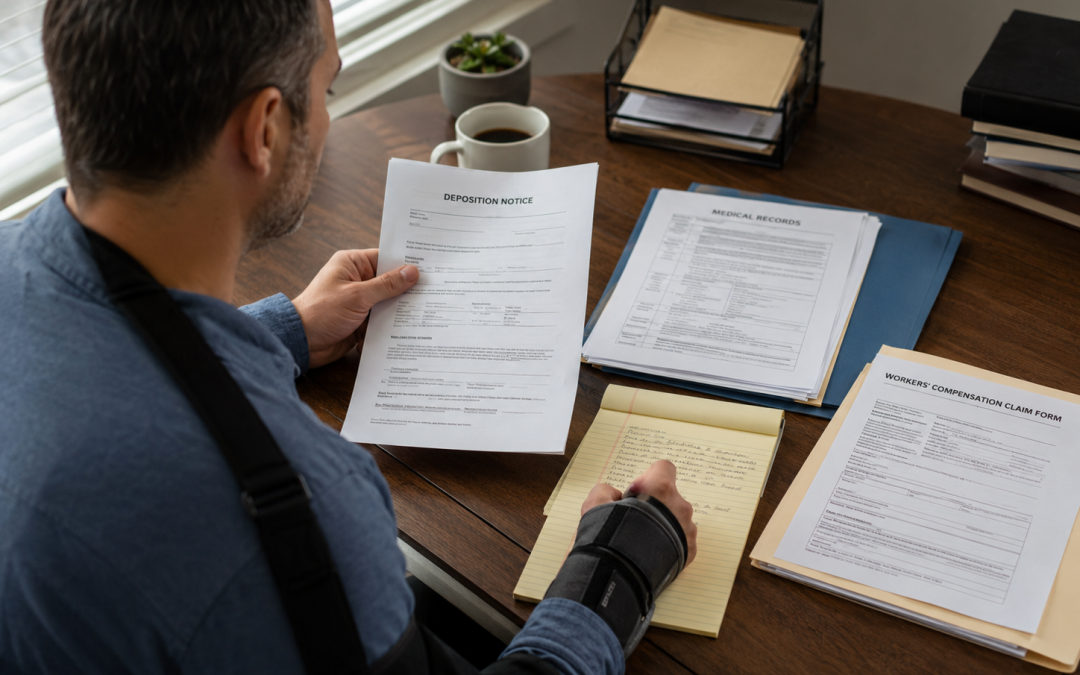
A workers’ comp deposition is a formal question-and-answer session in a California workers’ compensation case. The injured worker answers questions under oath while a court reporter records the testimony.
Depositions can feel stressful, especially when the case involves medical history, job duties, injury details, prior claims, or disputed benefits. Still, preparation can make the process easier. A strong deposition usually depends on truthful answers, careful listening, organized records, and a clear understanding of the claim.
What Is a Workers’ Comp Deposition?
A deposition allows the parties to gather sworn testimony before a workers’ compensation hearing or settlement. In California, the Workers’ Compensation Appeals Board, a workers’ compensation judge, or any party may request a deposition in a case before the WCAB under Labor Code Section 5710.
The insurance company or employer often requests the injured worker’s deposition. Defense counsel may ask about how the injury happened, what symptoms followed, what medical treatment occurred, and how the injury affects work and daily activities.
A deposition is not a casual conversation. The answers become part of the case record and may affect settlement, medical disputes, disability issues, and hearing strategy.
Why Depositions Matter in Workers’ Comp Cases
A deposition helps the other side evaluate the claim. It may also help clarify facts that do not appear clearly in medical records or claim forms.
Questions often focus on:
- Job duties
- Date and location of injury
- How the injury happened
- Body parts affected
- Symptoms and limitations
- Medical treatment
- Prior injuries or claims
- Work restrictions
- Return-to-work efforts
- Wage history
- Daily activities
- Witnesses and employer reports
The defense may compare deposition answers to medical records, employer reports, surveillance, prior claims, and benefit documents. Because consistency matters, an injured worker should avoid guessing and should correct mistakes when needed.
How to Prepare Before the Deposition
Preparation should start before the deposition date. The injured worker should review the basic facts of the case and gather important documents. However, testimony should still come from memory and honest answers, not memorized scripts.
Helpful preparation steps may include:
- Review the injury timeline
- Read the claim form
- Review medical treatment dates
- Check work restrictions
- Organize wage records
- List prior injuries or claims
- Review employer incident reports
- Identify witnesses
- Write down current symptoms
- Confirm the deposition time and location
An injured worker should also understand who will attend. A deposition may include the injured worker, the worker’s lawyer, defense counsel, a court reporter, an interpreter, and sometimes a claims representative.
What Happens During the Deposition?
At the deposition, the court reporter places the injured worker under oath. Then, the defense lawyer usually asks questions. The worker’s lawyer may object when appropriate and may ask follow-up questions if needed.
The injured worker should listen to each question, pause, and answer only what the question asks. Short, truthful answers usually work better than long explanations. If a question is unclear, the worker can ask for clarification.
Good deposition habits include:
- Tell the truth
- Answer verbally
- Avoid guessing
- Ask for clarification
- Take breaks when needed
- Correct mistakes clearly
- Keep answers focused
- Avoid exaggeration
- Do not argue with the lawyer
The worker should not feel pressured to know every date, medical term, or document detail. “I do not remember” or “I do not know” may be appropriate when truthful.
Common Workers’ Comp Deposition Questions
Defense counsel often asks about the injury, health history, work history, and daily life. Some questions may feel personal, but they may relate to medical causation, disability, or apportionment.
Common topics may include:
- Prior jobs and physical duties
- How long the worker held the job
- How the injury occurred
- Whether the worker reported the injury
- Names of supervisors or witnesses
- Medical providers seen after the injury
- Prior injuries to the same body part
- Prior workers’ compensation claims
- Current pain and limitations
- Activities the worker can and cannot do
- Time missed from work
- Modified duty offers
- Current employment status
Questions about prior injuries do not automatically defeat a claim. California workers’ compensation cases often involve disputed causation or apportionment, so medical history may matter.
Rights and Benefits Related to the Deposition
California law gives certain protections when an injured worker attends a workers’ compensation deposition. Labor Code Section 5710 lists several deposition-related benefits for the deponent, including reasonable expenses of transportation, meals, lodging when necessary, reimbursement for wage loss, and one day of temporary disability indemnity for each day of wages lost while attending the deposition.
The same statute also allows a reasonable attorney-fee allowance for the deponent when represented by a California-licensed attorney. California regulations address petitions for 5710 attorney’s fees for representation at an applicant deposition.
The exact payment issues can depend on the facts, representation, travel, wage loss, and deposition arrangements. Therefore, the injured worker should keep receipts, mileage details, and wage-loss information when attending the deposition.
Mistakes to Avoid
Small mistakes can create larger problems when the insurance company reviews the transcript. The worker should stay careful and avoid treating the deposition like an informal meeting.
Common mistakes include:
- Guessing about dates or facts
- Exaggerating symptoms
- Minimizing serious limitations
- Arguing with defense counsel
- Volunteering unrelated details
- Hiding prior injuries
- Giving answers without understanding the question
- Forgetting to mention affected body parts
- Discussing the case on social media
- Ignoring deposition preparation
Consistency matters. If an answer differs from a medical record, the defense may use that difference later. Sometimes, the difference has a simple explanation. Still, clear and accurate testimony helps prevent avoidable disputes.
After the Deposition
After the deposition, the court reporter prepares a transcript. The parties may review the transcript for accuracy. If the transcript contains an error, the worker may need to correct it through the proper process.
A deposition may lead to more medical evaluation, settlement talks, benefit disputes, or a hearing before the WCAB. The Workers’ Compensation Appeals Board exercises judicial powers in California workers’ compensation cases and provides leadership to the workers’ compensation community through the WCAB.
Her Lawyer’s article on workers’ compensation requirements in California explains related employer coverage duties and claim basics.
FAQs About Workers’ Comp Depositions
Does an injured worker have to attend a workers’ comp deposition?
Usually, yes, when the deposition is properly noticed in a workers’ compensation case. Failing to attend may create case problems or delay benefits.
How long does a workers’ comp deposition take?
Many depositions last a few hours, but timing depends on injury complexity, medical history, disputed issues, and the number of questions.
Can an injured worker take breaks during a deposition?
Yes. A worker may ask for reasonable breaks. However, a pending question usually should be answered before the break unless counsel instructs otherwise.
Should an injured worker guess if they do not remember?
No. A truthful “I do not remember” is usually better than guessing. Guessing can create inaccurate testimony and later credibility issues.
Legal Help With a Workers’ Comp Deposition
A workers’ comp deposition can affect medical disputes, disability benefits, settlement value, return-to-work issues, and hearing strategy. A strong next step often depends on the injury timeline, medical records, work history, prior claims, deposition notice, and disputed benefits.
Her Lawyer, A Professional Law Corporation, assists with California workplace injury and workers’ compensation matters involving depositions, benefits, medical disputes, and claim strategy. Contact Her Lawyer to request a confidential consultation and discuss possible next steps.