
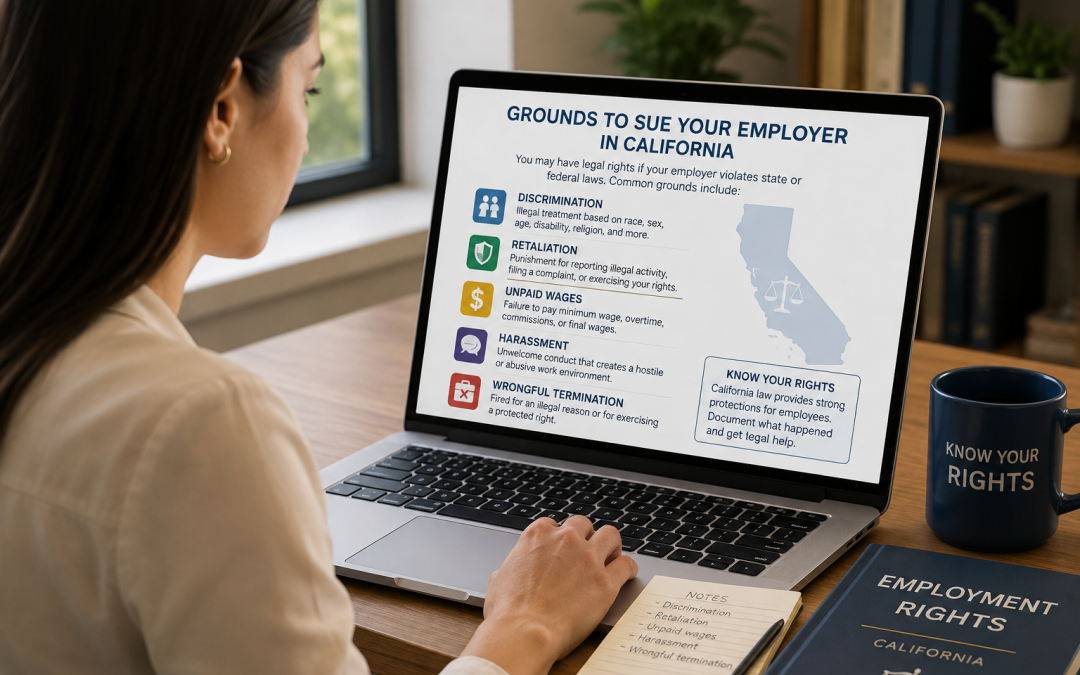
Grounds to sue your employer in California may include discrimination, harassment, retaliation, unpaid wages, wrongful termination, failure to accommodate, contract violations, or violations of protected leave rights. A lawsuit usually depends on the facts, available evidence, filing deadlines, and whether the employee must first file with a government agency.
California law gives employees many workplace protections, but not every unfair workplace decision creates a legal claim. A strong claim usually connects the employer’s conduct to a specific law, protected right, contract term, or wage obligation.
Discrimination
Discrimination may give an employee grounds to sue when an employer treats the employee worse because of a protected characteristic. The California Civil Rights Department enforces state laws protecting applicants and employees from discrimination, harassment, and retaliation based on protected characteristics.
Protected characteristics may include:
- Race
- Religion
- Sex
- Pregnancy
- Disability
- Medical condition
- Age
- National origin
- Ancestry
- Sexual orientation
- Gender identity
- Gender expression
- Marital status
- Military or veteran status
Discrimination may appear in hiring, pay, promotion, scheduling, discipline, termination, job assignments, or workplace policies.
Harassment
Workplace harassment may support a claim when the conduct targets a protected characteristic and becomes severe or pervasive enough to affect the work environment. Harassment can involve comments, slurs, threats, sexual conduct, unwanted messages, intimidation, or offensive workplace behavior.
The Civil Rights Department handles workplace harassment complaints involving protected characteristics. Sexual harassment may also involve unwanted sexual comments, pressure for dates, inappropriate touching, sexual images, or retaliation after rejection.
A harassment claim often depends on documentation, witness information, HR complaints, and how the employer responded after learning about the conduct.
Retaliation
Retaliation happens when an employer punishes an employee for exercising a protected right. The California Labor Commissioner explains that employees and applicants have the right to exercise labor rights without retaliation or discrimination.
Protected activity may include reporting unpaid wages, filing a wage claim, requesting paid sick leave, reporting unsafe conditions, complaining about discrimination, requesting accommodation, or participating in an investigation.
Retaliation may include:
- Termination
- Demotion
- Reduced hours
- Worse shifts
- Discipline
- Threats
- Denial of promotion
- Hostile treatment
California Labor Code Section 1102.5 also protects employees who disclose suspected legal violations to a government agency, law enforcement, a supervisor, or another person with authority to investigate or correct the issue.
Unpaid Wages, Overtime, and Break Violations
Wage and hour violations may give an employee grounds to sue or file a wage claim. These claims may involve unpaid minimum wage, unpaid overtime, missed meal breaks, missed rest breaks, unpaid commissions, improper deductions, off-the-clock work, or late final wages.
Common wage issues include:
- Unpaid regular wages
- Unpaid overtime
- Missed meal or rest breaks
- Unpaid final wages
- Unpaid commissions
- Incorrect wage statements
- Misclassification as exempt
- Misclassification as an independent contractor
Pay stubs, timecards, schedules, payroll records, and messages about work hours can help support wage claims.
Wrongful Termination
Wrongful termination may occur when an employer fires an employee for an unlawful reason. California’s at-will employment rule allows many terminations for lawful reasons, but an employer cannot fire an employee because of discrimination, retaliation, protected leave, whistleblowing, wage complaints, or another reason that violates public policy.
A wrongful termination claim often depends on timing and evidence. For example, termination soon after a discrimination complaint, wage complaint, accommodation request, or protected leave request may deserve closer review.
Her Lawyer’s article on steps after wrongful termination explains what records may help after a disputed firing.
Failure to Provide Reasonable Accommodation
An employee may have grounds to sue when an employer fails to provide a reasonable accommodation for disability, pregnancy, religion, or another legally protected need. Accommodation claims often involve medical restrictions, religious observance, pregnancy-related limitations, scheduling needs, modified duties, leave, or workplace policy changes.
The California Civil Rights Department handles complaints involving reasonable accommodation, pregnancy disability leave, and family leave rights. Employers should usually review the request, discuss possible options, and avoid retaliation after an employee asks for accommodation.
Useful records may include accommodation requests, medical notes, HR emails, schedule changes, policy documents, and denial explanations.
Breach of Employment Contract
An employee may sue for breach of employment contract when an employer fails to follow a valid agreement. Employment contract disputes may involve salary, commissions, bonuses, severance, job term, termination rules, notice requirements, or other promised benefits.
California Courts explains that a breach of contract claim generally requires a legally enforceable agreement and a failure to do what the contract required. The court’s contract guidance also notes that a contract may involve written or oral promises, depending on the facts.
Contract evidence may include offer letters, signed agreements, commission plans, bonus policies, severance agreements, emails, and pay records.
Protected Leave Violations
Protected leave violations may give an employee grounds to sue when an employer denies leave, interferes with leave, retaliates after leave, or terminates an employee for using protected time off.
Leave issues may involve:
- Family and medical leave
- Pregnancy disability leave
- Paid sick leave
- Disability-related leave
- Domestic violence or safety leave
- Military leave
- Jury duty
- Voting leave
A leave claim may depend on employer size, employee eligibility, notice, medical documentation, and the reason for the employer’s decision.
What Evidence Can Help an Employment Claim?
Employment claims often depend on documents and timing. A strong file should show what happened, when it happened, who knew, and how the employer responded.
Helpful records may include:
- HR complaints
- Emails and text messages
- Pay stubs
- Timecards
- Schedules
- Performance reviews
- Discipline notices
- Termination letters
- Accommodation requests
- Leave requests
- Witness names
- Written timeline
Employees should preserve records lawfully and avoid taking confidential company files outside authorized access.
FAQs About Grounds to Sue an Employer in California
What are common grounds to sue an employer in California?
Common grounds include discrimination, harassment, retaliation, unpaid wages, wrongful termination, failure to accommodate, protected leave violations, and breach of employment contract.
Can an employee sue for unfair treatment at work?
Unfair treatment alone may not support a lawsuit. The employee usually needs facts showing the employer violated a law, contract, wage obligation, protected leave right, or anti-discrimination protection.
Does an employee need to file with an agency before suing?
Some claims require an agency filing before a lawsuit. Discrimination and harassment claims often involve CRD or EEOC, while wage and retaliation claims may involve the Labor Commissioner or court.
What records help support a workplace claim?
Helpful records include HR complaints, emails, texts, pay records, timecards, schedules, performance reviews, termination notices, accommodation requests, leave records, and witness names.
Legal Help With Grounds to Sue an Employer in California
Grounds to sue an employer in California can involve wages, discrimination, harassment, retaliation, accommodation issues, leave rights, contracts, and wrongful termination. The best next step often depends on the claim type, documents, timeline, employer response, and filing deadlines.
Her Lawyer, A Professional Law Corporation, assists with California employment matters involving workplace rights, wage disputes, discrimination, retaliation, harassment, wrongful termination, leave issues, and contract claims. Contact Her Lawyer to request a confidential consultation and discuss possible next steps.