
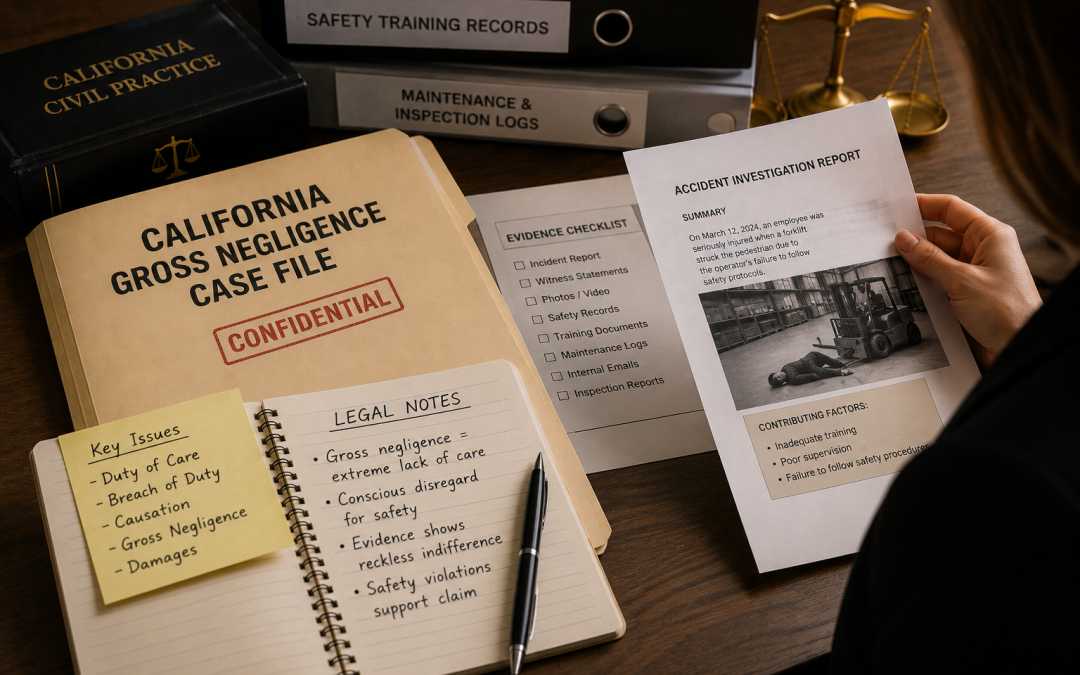
A gross negligence cause of action in California is usually not a separate standalone claim. Instead, California courts generally treat gross negligence as an aggravated form of negligence.
Gross negligence matters when a defendant’s conduct goes far beyond ordinary carelessness. It may affect liability waivers, statutory immunity, damages, and how a court evaluates the seriousness of the defendant’s conduct.
Is Gross Negligence a Separate Cause of Action in California?
California generally does not recognize a separate common law cause of action for gross negligence apart from negligence. In many cases, a plaintiff pleads negligence and alleges facts showing the defendant acted with gross negligence.
California courts have explained this point in cases such as Epochal Enterprises, Inc. v. LF Encinitas Properties, LLC. The court stated that gross negligence is not a distinct common law claim separate from negligence.
This does not mean gross negligence is irrelevant. It means the legal theory usually remains negligence, while the facts show a higher degree of misconduct.
What Is Gross Negligence?
California’s civil jury instruction defines gross negligence as the lack of any care or an extreme departure from what a reasonably careful person would do in the same situation. The Judicial Council’s CACI No. 425 explains this standard.
Ordinary negligence may involve a mistake, oversight, or failure to use reasonable care. Gross negligence involves conduct that shows a much more serious disregard for safety.
For example, ordinary negligence may involve failing to clean a spill promptly. Gross negligence may involve ignoring repeated reports of a dangerous condition after several near-injuries and leaving the hazard open to the public.
Her Lawyer’s guide to gross negligence explains the broader meaning of the term and how it differs from ordinary carelessness.
Elements of a Negligence Claim Involving Gross Conduct
Because gross negligence usually works as a form of negligence, the plaintiff generally must prove the standard negligence elements.
A plaintiff usually must show:
- The defendant owed a duty of care.
- The defendant breached that duty.
- The breach caused injury or harm.
- The plaintiff suffered damages.
- The defendant’s conduct involved a lack of any care or an extreme departure from reasonable care.
The last point is what separates a gross negligence allegation from an ordinary negligence claim. The facts must show more than a simple accident.
When Gross Negligence Matters
Gross negligence can matter in several California legal contexts.
Liability waivers
Many businesses use liability waivers to limit claims for ordinary negligence. However, California courts may treat gross negligence differently.
In City of Santa Barbara v. Superior Court, the California Supreme Court held that a preinjury release cannot waive liability for future gross negligence. This issue often arises in recreational activities, sports programs, gyms, camps, rental agreements, and other services involving signed releases.
Statutory immunity
Some California statutes protect certain people or entities from liability unless the conduct rises to gross negligence. For example, certain emergency, recreational, or public-entity immunity rules may include exceptions for grossly negligent conduct.
In these cases, proving ordinary negligence may not be enough. The plaintiff may need facts showing an extreme departure from reasonable care.
Punitive damages
Gross negligence does not automatically justify punitive damages. California punitive damages law appears in Civil Code Section 3294.
A plaintiff seeking punitive damages usually must prove oppression, fraud, or malice. Gross negligence may support the factual background, but the plaintiff must still meet the specific punitive damages standard.
Evidence That May Support a Gross Negligence Claim
A strong claim usually depends on evidence showing the defendant knew or should have known about a serious risk and failed to use even slight care.
Helpful evidence may include:
- Safety complaints
- Inspection logs
- Maintenance records
- Prior incident reports
- Emails or text messages
- Surveillance video
- Photos of the hazard
- Witness statements
- Training records
- Internal policies
- Expert opinions
For example, a single broken step may support ordinary negligence. However, repeated complaints, prior falls, ignored repair requests, and missing warning signs may support a stronger allegation.
Common Defenses
A defendant may argue the conduct was careless but not grossly negligent. This defense often focuses on whether the defendant took some reasonable safety steps.
Other defenses may include lack of duty, no causation, no damages, assumption of risk, waiver, comparative fault, or lack of evidence showing an extreme departure from reasonable conduct.
California follows comparative negligence. If the plaintiff also acted negligently, the court may reduce damages by the plaintiff’s percentage of fault. Her Lawyer’s article on comparative negligence explains how fault percentages may affect compensation.
Deadlines for California Claims
Many California personal injury claims must be filed within two years under Code of Civil Procedure Section 335.1. However, different deadlines may apply for property damage, medical claims, government claims, contract-related issues, or claims involving minors.
A claim against a government entity may require an administrative claim before a lawsuit. Missing that deadline can affect the case even if the injury deadline has not expired.
FAQs About Gross Negligence in California
Can someone sue for gross negligence in California?
A person may bring a negligence claim and allege facts showing gross negligence. California generally does not treat gross negligence as a separate common law cause of action.
Is gross negligence worse than ordinary negligence?
Yes. Gross negligence means a lack of any care or an extreme departure from reasonable conduct. Ordinary negligence involves failure to use reasonable care.
Can a waiver block a gross negligence claim?
Not always. California law may allow waivers for ordinary negligence in some settings, but a preinjury waiver generally cannot release future gross negligence.
Does gross negligence guarantee punitive damages?
No. Punitive damages require proof of oppression, fraud, or malice under California law. Gross negligence alone may not satisfy that standard.
Legal Help With a California Gross Negligence Claim
A California gross negligence case depends on detailed facts. Safety records, prior complaints, warnings, inspection history, and expert review may all affect whether the conduct shows an extreme departure from reasonable care.
Her Lawyer’s California personal injury attorneys assist with serious injury claims involving unsafe conditions, disputed fault, and negligent conduct. Contact Her Lawyer to discuss a California gross negligence or personal injury matter.