
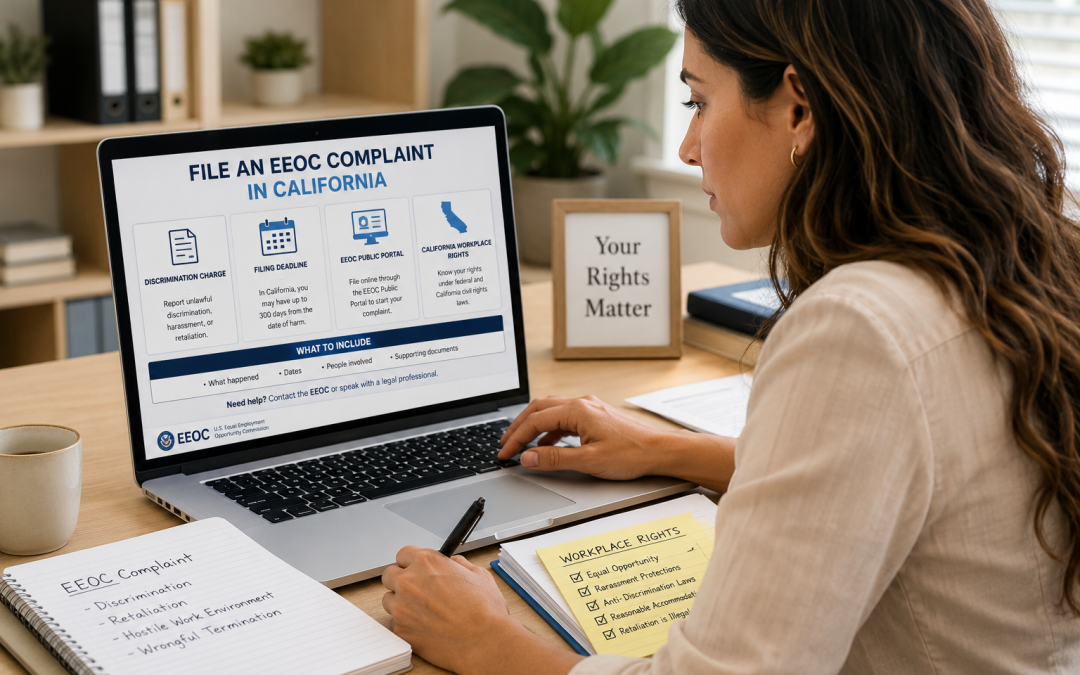
Filing an EEOC complaint in California usually means filing a charge of discrimination with the U.S. Equal Employment Opportunity Commission. A charge asks the EEOC to review a workplace discrimination, harassment, or retaliation issue under federal employment laws.
California workers may also have rights under state law through the California Civil Rights Department, often called CRD. In many cases, the EEOC and CRD processes may overlap, but the correct filing path depends on the claims, employer, timing, and legal strategy.
What Is an EEOC Complaint?
An EEOC complaint is commonly called a charge of discrimination. The EEOC explains that most federal workplace discrimination laws require a person to file a charge before filing a lawsuit for unlawful discrimination. The Equal Pay Act has different rules.
An EEOC charge may involve discrimination, harassment, or retaliation based on:
- Race
- Color
- Religion
- Sex
- Pregnancy
- Sexual orientation
- Gender identity
- National origin
- Disability
- Age 40 or older
- Genetic information
- Retaliation for protected activity
A charge should describe what happened, who was involved, when the events occurred, and why the worker believes the conduct violated employment discrimination laws.
EEOC Filing Deadlines in California
Deadlines matter. The EEOC states that the general 180-calendar-day deadline may extend to 300 calendar days when a state or local agency enforces a law prohibiting employment discrimination on the same basis.
Because California has a state civil rights agency, many California private-sector discrimination charges may fall under the 300-day EEOC deadline. The EEOC Los Angeles office also states that a person generally has 300 days from the alleged harm to file a charge against an employer with 15 or more employees for certain discrimination claims in California.
A worker should not wait until the deadline is close. Internal HR complaints, union grievances, mediation, or informal negotiations may not stop the EEOC filing deadline.
How to File an EEOC Complaint Online
The EEOC allows workers to begin the process online through the EEOC Public Portal. A worker may submit an inquiry, provide basic information, schedule an intake appointment when required, and continue the filing process through the portal.
The filing process may involve:
- Creating an EEOC Public Portal account
- Submitting an inquiry
- Providing employer information
- Describing the discrimination or retaliation
- Identifying dates and people involved
- Uploading supporting documents
- Attending an intake appointment, if needed
- Signing a formal charge of discrimination
An inquiry is not always the same as a signed charge. A worker should confirm whether the EEOC has accepted and filed the charge before relying on the filing date.
What Information Is Needed?
A strong EEOC complaint should be clear and specific. The worker does not need every piece of evidence at the beginning, but the charge should include enough facts to explain the issue.
Helpful information may include:
- Employee name and contact information
- Employer name and address
- Supervisor or HR contact names
- Dates of discrimination or retaliation
- Protected characteristic or protected activity
- Description of what happened
- Names of witnesses
- Copies of relevant documents
- Prior HR complaints
- Termination, discipline, or demotion records
- Pay records, if wage discrimination is involved
A timeline can also help. For example, a worker may list when harassment began, when HR received notice, when retaliation occurred, and when the employer took adverse action.
EEOC and California CRD Dual Filing
California workers may have claims under both federal law and California’s Fair Employment and Housing Act. The California Civil Rights Department enforces state employment discrimination laws involving discrimination, harassment, retaliation, reasonable accommodation, CFRA leave, and pregnancy disability leave issues.
The EEOC explains that it has worksharing agreements with some state and local fair employment agencies to reduce duplicate processing. This process, called dual filing, can help protect rights under both federal and state law.
Still, dual filing should not be assumed automatically in every case. A worker should review agency notices and confirm whether the charge was filed with the EEOC, CRD, or both.
What Happens After Filing?
After a charge is filed, the EEOC may notify the employer, offer mediation, request an employer position statement, investigate documents, interview witnesses, or ask the charging party for more information.
The EEOC may eventually:
- Dismiss the charge
- Issue a notice of right to sue
- Find reasonable cause
- Invite conciliation
- Continue investigation
- Take other action allowed by law
A right-to-sue notice can start a short deadline to file a lawsuit. A worker should review any EEOC notice carefully and keep copies of every agency message.
Evidence That May Help an EEOC Complaint
EEOC complaints often depend on timing, documents, and witness information. A worker should preserve records lawfully and avoid taking confidential documents outside authorized access.
Helpful evidence may include:
- HR complaints
- Emails and text messages
- Performance reviews
- Disciplinary notices
- Pay records
- Schedule records
- Accommodation requests
- Medical leave records
- Termination letters
- Witness names
- Screenshots of relevant messages
- Written timeline
- Employer policies
The strongest records usually show what happened, when the employer knew, and how the employer responded.
Common Mistakes to Avoid
A worker filing an EEOC complaint should avoid missing deadlines, submitting vague facts, ignoring agency messages, or assuming an HR complaint is the same as an EEOC charge.
Common problems include:
- Waiting too long to contact the EEOC
- Filing only an internal complaint
- Not signing the formal charge
- Leaving out key dates
- Failing to save evidence
- Missing an EEOC interview
- Ignoring a right-to-sue notice
- Confusing EEOC and CRD deadlines
Clear records can help avoid confusion. A worker should save the charge number, portal messages, uploaded documents, and all notices from the agency.
FAQs About Filing an EEOC Complaint in California
How does a worker file an EEOC complaint in California?
A worker may begin through the EEOC Public Portal, provide information about the employer and alleged discrimination, participate in intake when required, and sign a formal charge of discrimination.
How long does a worker have to file an EEOC complaint in California?
Many California employment discrimination charges must be filed with the EEOC within 300 calendar days of the alleged harm, although deadlines can vary by claim and employer.
Is an EEOC complaint the same as a CRD complaint?
No. The EEOC enforces federal employment discrimination laws, while CRD enforces California civil rights laws. Some charges may be dual-filed, but workers should confirm the filing status with the agency.
Can a worker sue after filing an EEOC complaint?
Often, a worker must receive a notice of right to sue before filing certain federal discrimination claims in court. The deadline after receiving that notice can be short.
Legal Help With EEOC Complaints in California
Filing an EEOC complaint can affect discrimination claims, retaliation issues, settlement discussions, agency deadlines, right-to-sue notices, and future litigation options. A strong next step often depends on the filing deadline, employer response, evidence, agency notices, and whether the matter also involves California CRD.
Her Lawyer, A Professional Law Corporation, assists with California employment matters involving EEOC complaints, discrimination, harassment, retaliation, wrongful termination, leave rights, and workplace protections. Contact Her Lawyer to request a confidential consultation and discuss possible next steps.