
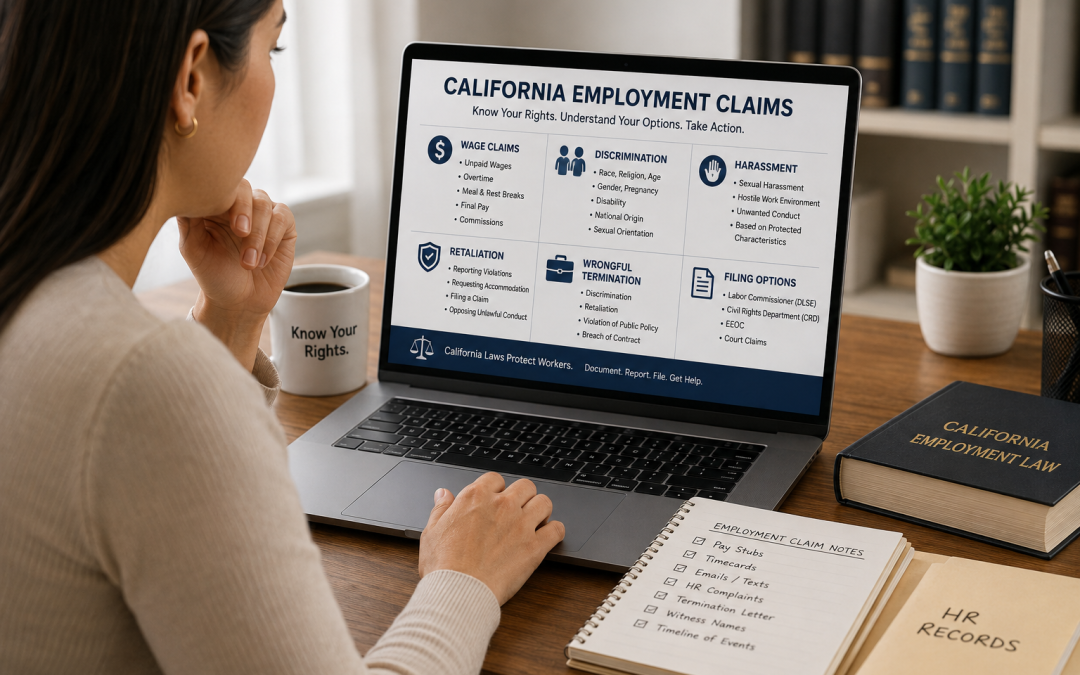
Employment claims in California may involve unpaid wages, discrimination, harassment, retaliation, wrongful termination, workplace safety, leave violations, or employment contract disputes. The right process depends on the type of claim, the employer’s conduct, available records, and filing deadlines.
California workers have several possible claim routes. Some claims go through the Labor Commissioner. Others may involve the California Civil Rights Department, the EEOC, workers’ compensation, or court.
Common Employment Claims in California
California employment claims can arise during hiring, employment, leave, discipline, termination, or final pay. A claim usually needs facts showing the employer violated a specific workplace law, wage obligation, protected right, or contract term.
Common employment claims include:
- Unpaid wages
- Unpaid overtime
- Missed meal or rest breaks
- Late final pay
- Discrimination
- Harassment
- Retaliation
- Wrongful termination
- Failure to accommodate
- Protected leave violations
- Breach of employment contract
A workplace decision may feel unfair without creating a legal claim. However, if the employer’s conduct connects to wages, discrimination, protected leave, retaliation, or another legal protection, the issue may deserve closer review.
Wage Claims
Wage claims may involve unpaid wages, overtime, commissions, vacation pay, meal and rest break premiums, or late final pay. The California Labor Commissioner accepts wage claims from workers who believe an employer failed to pay wages or benefits owed.
Helpful wage claim records may include:
- Pay stubs
- Timecards
- Work schedules
- Final paycheck records
- Commission plans
- Overtime records
- Texts or emails about hours
California Labor Code Section 510 sets overtime rules for many nonexempt employees. Depending on the facts, unpaid overtime may support a wage claim or court action.
Discrimination and Harassment Claims
Discrimination claims may arise when an employer treats an applicant or employee worse because of a protected characteristic. Harassment claims may involve hostile conduct based on a protected characteristic.
The California Civil Rights Department handles complaints involving discrimination, harassment, retaliation, reasonable accommodation, family leave, and pregnancy disability leave.
Protected characteristics may include race, religion, sex, pregnancy, disability, medical condition, age, national origin, ancestry, sexual orientation, gender identity, gender expression, marital status, and military or veteran status.
Evidence may include HR complaints, emails, text messages, witness names, performance reviews, discipline records, or a timeline showing unequal treatment.
Retaliation Claims
Retaliation happens when an employer punishes a worker for exercising a protected right. Protected activity may include reporting unpaid wages, complaining about discrimination, requesting accommodation, filing a claim, reporting unsafe conditions, or participating in an investigation.
The California Labor Commissioner explains that workers have the right to exercise labor rights without retaliation or discrimination.
Retaliation may include:
- Termination
- Demotion
- Reduced hours
- Worse shifts
- Discipline
- Threats
- Denial of promotion
- Hostile treatment
Timing often matters. For example, a termination shortly after a wage complaint or discrimination report may raise retaliation concerns.
Wrongful Termination Claims
Wrongful termination may occur when an employer fires an employee for an unlawful reason. California is generally an at-will employment state, but employers cannot terminate workers because of discrimination, retaliation, protected leave, whistleblowing, wage complaints, or another reason that violates public policy.
Her Lawyer’s article on steps after wrongful termination explains what records may help after a disputed firing.
A former employee should save termination notices, final pay records, HR emails, performance reviews, complaint history, and witness information.
Accommodation and Leave Claims
Accommodation and leave claims may involve disability, pregnancy, religion, medical leave, family leave, or protected sick leave. Employers may need to review accommodation requests and consider reasonable options before denying them.
Useful records may include:
- Medical notes
- Accommodation requests
- Leave requests
- HR emails
- Schedule records
- Policy documents
- Written denial explanations
The California Civil Rights Department handles many accommodation and leave-related employment complaints through its employment enforcement process.
Filing an Employment Claim
The correct filing process depends on the claim. Wage claims may go to the Labor Commissioner. Discrimination, harassment, and some retaliation claims may go to CRD or the EEOC. Contract disputes or wrongful termination claims may require a different approach.
Important records may include:
- HR complaints
- Emails and texts
- Pay records
- Timecards
- Schedules
- Termination notices
- Accommodation requests
- Agency filings
- Witness names
- Written timeline
Deadlines can differ by claim type. A worker should identify the correct agency and timeline before waiting for an internal HR investigation to finish.
FAQs About Employment Claims in California
What are common employment claims in California?
Common claims include unpaid wages, overtime violations, missed breaks, discrimination, harassment, retaliation, wrongful termination, failure to accommodate, protected leave violations, and contract disputes.
Where does an employee file a wage claim in California?
Many wage claims can be filed with the California Labor Commissioner’s Office. The claim may involve unpaid wages, overtime, commissions, vacation pay, or final pay.
Where does an employee file a discrimination claim?
Many California employment discrimination claims start with the California Civil Rights Department. Federal discrimination claims may involve the EEOC.
What records help support an employment claim?
Helpful records include pay stubs, timecards, HR complaints, emails, texts, schedules, performance reviews, discipline notices, termination letters, accommodation requests, and witness names.
Legal Help With California Employment Claims
Employment claims in California can affect wages, job security, workplace safety, discrimination rights, retaliation protections, leave rights, and final pay. The best next step often depends on the claim type, documents, employer response, timeline, and filing deadline.
Her Lawyer, A Professional Law Corporation, assists with California employment matters involving wage claims, discrimination, harassment, retaliation, wrongful termination, accommodation issues, leave rights, and workplace protections. Contact Her Lawyer to request a confidential consultation and discuss possible next steps.