
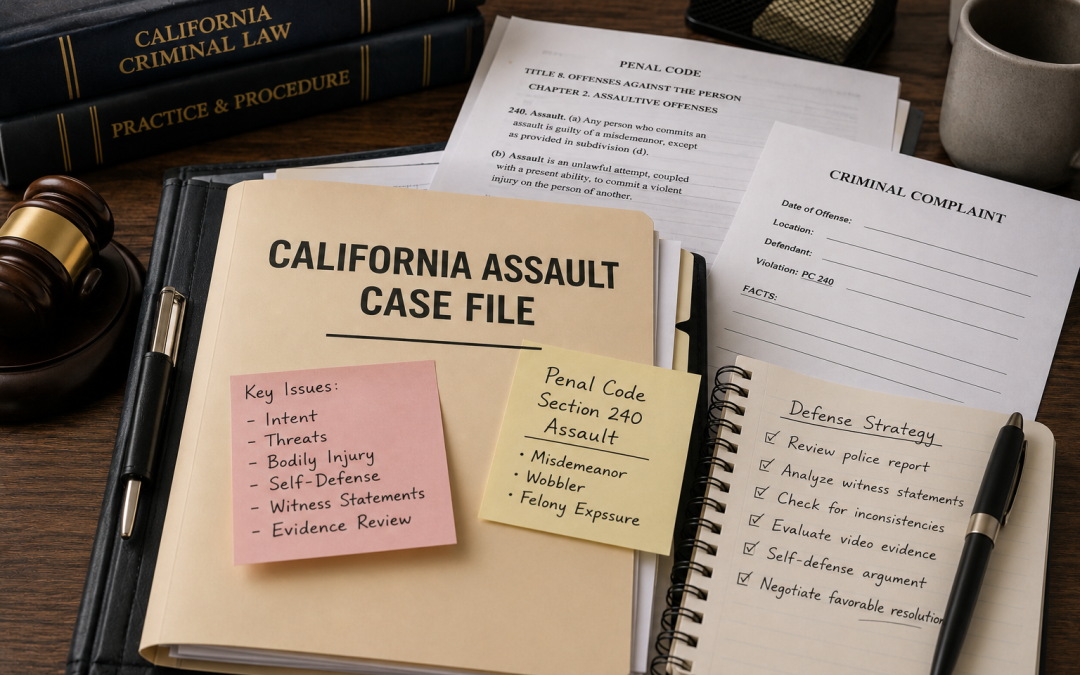
California does not classify assault as first-degree, second-degree, or third-degree assault. Instead, California law uses specific Penal Code sections to separate simple assault from more serious assault charges.
The charge depends on the alleged conduct, whether a weapon was involved, whether the alleged victim belonged to a protected group, and whether the facts show force likely to cause great bodily injury.
Does California Have Degrees of Assault?
California does not use “degrees” of assault in the way some states do. A person may hear terms like first-degree assault or aggravated assault in other jurisdictions, but California uses different statutory labels.
The main California assault categories include:
- Simple assault
- Assault on protected workers
- Assault with a deadly weapon
- Assault with a firearm
- Assault by force likely to produce great bodily injury
- Assault involving special victims or aggravating facts
Each charge carries different penalties. Therefore, the exact Penal Code section matters more than the phrase “degree of assault.”
Simple Assault in California
California defines assault under Penal Code Section 240 as an unlawful attempt, combined with present ability, to commit a violent injury on another person.
Assault does not require physical contact. A person may face an assault charge if prosecutors claim the person tried to apply force and had the ability to do so.
Simple assault is usually a misdemeanor. Under Penal Code Section 241, a basic assault conviction can carry up to six months in county jail, a fine of up to $1,000, or both.
Her Lawyer’s guide on how to beat a simple assault charge explains common defense issues in lower-level assault cases.
Assault on Protected Workers
California increases penalties when the alleged victim belongs to certain protected groups and performs official duties.
Penal Code Section 241 includes enhanced penalties for assault against people such as peace officers, firefighters, emergency medical technicians, lifeguards, process servers, traffic officers, code enforcement officers, animal control officers, search and rescue members, and certain healthcare workers.
In many of these cases, prosecutors must prove the accused person knew or reasonably should have known the alleged victim’s role. The penalty may increase to up to one year in county jail and a fine of up to $2,000.
Assault With a Deadly Weapon
Assault with a deadly weapon is one of the most serious common assault charges in California.
Under Penal Code Section 245, a person may face assault with a deadly weapon charges when prosecutors allege the person used a deadly weapon or instrument other than a firearm.
A deadly weapon may include an object designed to cause harm or an ordinary object used in a way likely to cause serious injury. Examples may include a knife, bat, vehicle, bottle, tool, or another object used dangerously.
The Assault with a deadly weapon is often a wobbler, meaning prosecutors may charge it as a misdemeanor or felony depending on the facts. A felony conviction can carry two, three, or four years in state prison or county jail under Penal Code Section 1170(h), depending on the charge and sentence structure.
Her Lawyer’s article on assault with a deadly weapon in California explains this charge in more detail.
Assault With Force Likely to Cause Great Bodily Injury
Penal Code Section 245 also covers assault by means of force likely to produce great bodily injury. This charge does not always require a weapon.
For example, prosecutors may file this charge after allegations involving repeated punches, kicks, stomping, or force aimed at a vulnerable part of the body. The issue is whether the force was likely to cause significant or substantial physical injury.
The alleged victim does not always need to suffer great bodily injury for the charge to apply. However, actual injuries can affect charging decisions, plea negotiations, sentencing, and restitution.
Assault With a Firearm
California treats firearm-related assault more seriously than basic assault. Penal Code Section 245 includes separate provisions for assault with a firearm, assault with a semiautomatic firearm, assault with a machine gun, and assault with an assault weapon or .50 BMG rifle.
Penalties depend on the firearm type and facts. Some firearm assault charges carry several years in custody, and cases involving peace officers or firefighters can carry even higher exposure.
Firearm cases may also involve separate weapons charges, firearm enhancements, protective orders, and firearm possession restrictions.
Assault vs. Battery
Assault and battery are different crimes in California.
The Assault focuses on an unlawful attempt with present ability to commit violent injury. Battery requires actual use of force or violence against another person.
California defines battery under Penal Code Section 242. A person can face assault charges without touching anyone. By contrast, battery requires unlawful physical contact.
Her Lawyer’s article on domestic battery in California explains one battery offense involving intimate partners.
Common Defenses to Assault Charges
A defense depends on the charge and evidence. Common defenses may include:
- No present ability to use force
- No willful act
- Self-defense
- Defense of another person
- Accident
- False accusation
- Mistaken identity
- Insufficient evidence of a weapon
- Insufficient evidence of force likely to cause great bodily injury
- Unlawful police stop, search, or interrogation
Self-defense often matters in assault cases. A person may use reasonable force to prevent imminent harm. However, the force must fit the threat, and the defense depends on the timing and facts.
Video footage, witness statements, 911 calls, injuries, messages, medical records, body-camera footage, and police reports may all affect the case.
Can Assault Charges Be Dismissed?
Assault charges may be dismissed when prosecutors lack evidence, witnesses contradict each other, video undermines the accusation, police violated constitutional rights, or the facts support a legal defense.
A dismissal is not automatic. Prosecutors may still proceed even if the alleged victim does not want the case to continue.
Her Lawyer’s guide on how to get assault charges dismissed explains dismissal arguments, self-defense issues, and evidence problems.
FAQs About Degrees of Assault in California
Does California have first-degree assault?
No. California does not use first-degree, second-degree, or third-degree assault labels. California uses specific Penal Code sections such as simple assault, assault with a deadly weapon, and assault with a firearm.
Is simple assault a felony in California?
Simple assault is usually a misdemeanor. More serious facts, protected victims, weapons, firearms, or force likely to cause great bodily injury may lead to more serious charges.
Can assault be charged without physical contact?
Yes. California assault does not require touching. Prosecutors must generally prove an unlawful attempt and present ability to commit violent injury.
What makes assault more serious in California?
Weapons, firearms, protected victims, prior convictions, serious force, injuries, threats, and surrounding facts may increase the seriousness of an assault case.
Legal Help With California Assault Charges
California assault charges can affect freedom, employment, immigration status, firearm rights, custody, and reputation. The exact Penal Code section, evidence, and available defenses matter.
Her Lawyer’s California criminal defense attorneys assist with assault, battery, and related criminal defense matters. Contact Her Lawyer to discuss a California assault charge.