
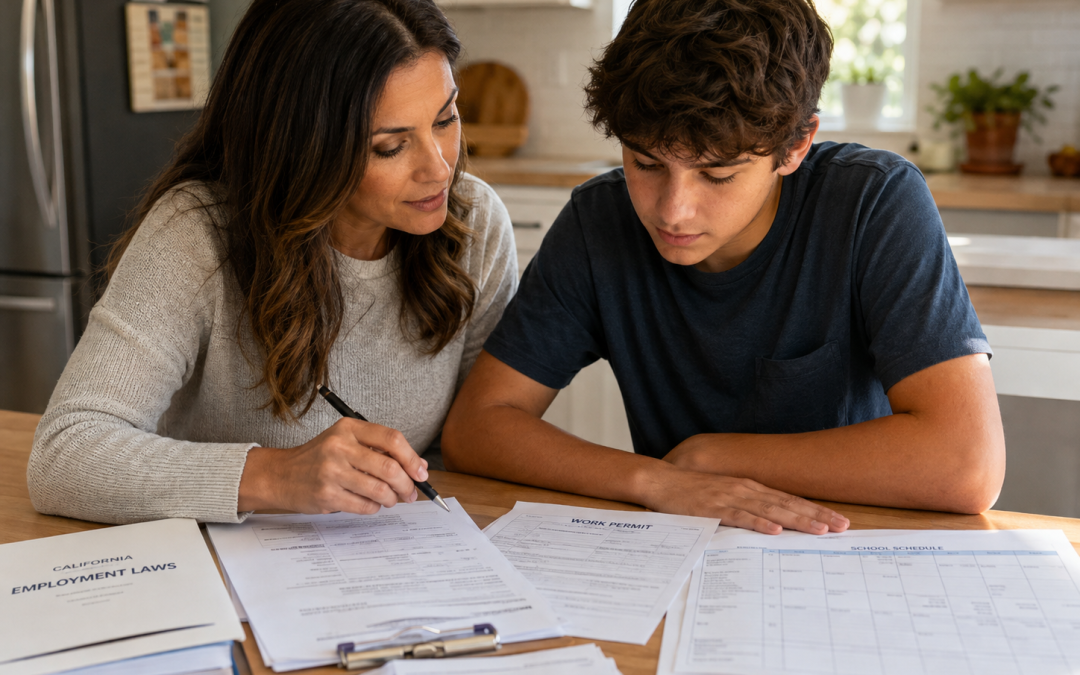
California child labor laws protect minors from unsafe work, excessive hours, school interference, and unlawful employment practices. These rules affect minors, parents, schools, and employers.
In California, most minors under 18 need a permit to work. Employers must also follow limits on hours, school-day work, prohibited occupations, wages, breaks, and recordkeeping. Some industries, such as entertainment and agriculture, may have special rules.
Who Counts as a Minor Under California Child Labor Laws?
A minor is generally a person under 18. California child labor rules apply differently depending on the minor’s age, school status, job duties, and industry.
The California Labor Commissioner explains that, except in limited circumstances, all minors under 18 employed in California must have a permit to work. The agency’s child labor resources also address school attendance, age requirements, wage rules, hour limits, employer duties, and prohibited work.
These rules can apply to part-time jobs, summer jobs, seasonal jobs, entertainment work, family businesses, restaurant work, retail jobs, and other employment involving minors.
Work Permits for Minors
Most employed minors need a work permit before starting a job. A work permit helps confirm the minor’s age, school status, and lawful work hours.
California Education Code Section 49112 addresses permits to work. It allows permits for minors who meet school-grade requirements and sets school-day hour limits for 14- and 15-year-olds and 16- and 17-year-olds.
A work permit may involve:
- The minor’s personal information
- Parent or guardian signature
- Employer information
- School authorization
- Job duties
- Work schedule
- Age verification
A minor usually obtains the work permit through the school or school district. Employers should not allow a minor to begin work until the required permit is complete.
Hour Limits for Minors
California limits how many hours minors may work. The limits depend on age, school attendance, day of the week, and whether school is in session.
Under California Labor Code Section 1391, employers may not employ minors 15 or younger for more than 8 hours in a day or 40 hours in a week. The same statute also restricts work before 7 a.m. or after 7 p.m., except that minors may work until 9 p.m. from June 1 through Labor Day when the statute allows it.
The rules are stricter during school periods. A work permit may also limit the exact schedule. Employers should follow both the statute and the permit.
School Attendance and Minor Employment
California child labor laws are closely tied to school attendance. A job should not interfere with compulsory education, school performance, or legally required attendance.
A school or district may deny, limit, or revoke a work permit when employment conflicts with school obligations. Work permits can also be cancelled when the conditions for issuing the permit no longer exist or never existed.
For that reason, parents and minors should review both the employer’s schedule and the school’s permit terms. A job that seems lawful during summer may not be lawful during the school year.
Prohibited Jobs for Minors
California restricts minors from dangerous, harmful, or unsuitable work. Some restrictions come from state law. Others come from federal law.
Prohibited or restricted work may involve hazardous machinery, dangerous manufacturing, certain construction work, mining, explosives, roofing, logging, power-driven equipment, and other high-risk duties. The Division of Labor Standards Enforcement may also determine whether a trade, process, occupation, or work method is dangerous enough to justify excluding minors.
Employers should not assume a minor can perform every task in a workplace. For example, a minor hired for a restaurant or retail job may still face limits involving certain machinery, late hours, deliveries, or hazardous duties.
Entertainment Work for Minors
California has special rules for minors in the entertainment industry. These rules can affect actors, models, performers, influencers, background performers, and other minors working in entertainment.
The Labor Commissioner explains that all minors working in California’s entertainment industry must register and obtain the required entertainment work permit. Applicants ages 14 through 17 must also complete sexual harassment prevention training before obtaining a minor’s entertainment work permit.
California regulations also require employers in the entertainment industry to apply for a permit to employ minors in work that is not hazardous or detrimental to the minor’s health, safety, morals, or education.
Entertainment work can involve special rules about studio teachers, trust accounts, working hours, infant work, on-location work, and production company responsibilities.
Wages, Breaks, and Workplace Rights
Minors generally have wage and hour rights. A minor’s age does not allow an employer to ignore minimum wage, overtime, meal breaks, rest breaks, payroll records, or anti-retaliation protections when those laws apply.
A minor should receive accurate pay records and should be paid for all hours worked. Employers should also track minor work hours carefully because hour violations can create separate child labor issues.
Helpful records may include:
- Work permit
- School schedule
- Timecards
- Pay stubs
- Written schedule
- Texts with supervisors
- Job description
- Parent or guardian communications
- Employer handbook
- Break records
Parents and minors should keep copies of work-related documents, especially if the job schedule changes after the permit is issued.
What If an Employer Violates Child Labor Laws?
Child labor violations can involve missing work permits, excessive hours, late-night work, prohibited duties, unsafe conditions, unpaid wages, or retaliation. The right response depends on the violation and the minor’s safety.
Possible next steps may include:
- Save schedules and pay records
- Keep a copy of the work permit
- Ask the school about permit terms
- Report safety concerns immediately
- Contact the Labor Commissioner
- File a wage claim if wages are unpaid
- Document retaliation or threats
- Review whether the job duties are prohibited
If a minor is injured at work, workers’ compensation issues may also arise. If the employer retaliates after a minor or parent raises concerns, additional legal protections may apply.
FAQs About California Child Labor Laws
Does a 16-year-old need a work permit in California?
Usually, yes. Most minors under 18 need a permit to work in California unless a limited exception applies.
How late can a minor work in California?
The answer depends on age, school status, season, permit terms, and job type. Labor Code Section 1391 generally limits work for minors 15 or younger before 7 a.m. and after 7 p.m., with certain summer work allowed until 9 p.m.
Can minors work full-time during summer?
Some minors may work longer hours during school breaks, but age limits, permit requirements, prohibited job rules, and maximum-hour restrictions still apply.
Are child performers covered by special rules?
Yes. Minors working in entertainment generally need entertainment work permits, and employers may need permits to employ minors in the industry.
Legal Help With California Child Labor Issues
California child labor issues can affect work permits, school schedules, wages, unsafe job duties, entertainment work, retaliation, and workplace injuries. A strong next step often depends on the minor’s age, permit terms, school status, job duties, work hours, and employer records.
Her Lawyer, A Professional Law Corporation, assists with California employment matters involving wage issues, workplace rights, retaliation, workers’ compensation, and related family concerns. Contact Her Lawyer to request a confidential consultation and discuss possible next steps.