
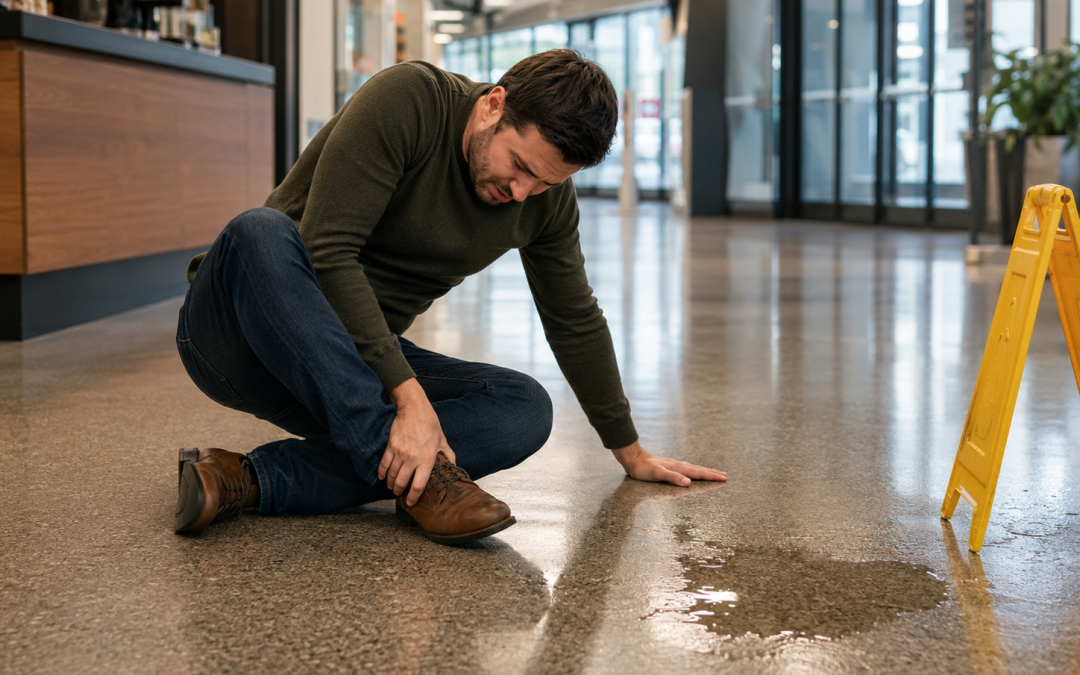
Average slip and fall payouts can vary widely by state. However, there is no official state-by-state average that applies to every claim.
Many slip and fall settlements are private. The final value depends more on injury severity, liability evidence, medical treatment, insurance coverage, and state negligence rules than on location alone.
What Is a Slip and Fall Case?
A slip and fall case is a premises liability claim. It usually happens when someone is injured after falling because of a dangerous condition on another person’s property.
Examples may include wet floors, broken stairs, poor lighting, uneven pavement, loose mats, missing handrails, or unmarked hazards. A property owner or business is not automatically liable every time someone falls. The injured person usually must show the property owner knew or should have known about the dangerous condition and failed to fix it or warn visitors.
Her Lawyer’s guide on slip and fall out-of-court settlement amounts explains how these claims may settle before trial.
Why Slip and Fall Payouts Differ by State
Slip and fall payouts differ by state because each state has its own premises liability rules, fault laws, filing deadlines, and damages rules. The same injury may be valued differently depending on where the fall happened.
Important state-law factors include:
- Comparative or contributory negligence rules
- Statutes of limitations
- Rules for claims against government property
- Limits on certain damages
- Local jury trends
- Insurance requirements and policy limits
For example, California generally allows an injured person to recover damages even if they were partly at fault. The payout is reduced by the injured person’s percentage of responsibility. Other states may reduce recovery differently or bar recovery after a certain level of fault.
Her Lawyer’s article on negligence laws by state explains the difference between comparative and contributory negligence rules.
What Factors Affect a Slip and Fall Payout?
The most important factor is usually the injury. A minor sprain may settle for far less than a case involving surgery, a hip fracture, spinal injury, or traumatic brain injury.
Settlement value may depend on:
- Emergency room treatment
- Follow-up medical care
- Physical therapy
- Surgery or future treatment
- Lost income
- Reduced earning capacity
- Pain and suffering
- Permanent impairment
- Comparative fault
- Strength of the evidence
- Insurance coverage
Evidence also matters. Photos, videos, incident reports, witness statements, medical records, and maintenance logs can affect whether the injured person can prove liability.
A strong injury claim can lose value if liability is weak. A strong liability case can also settle for less if the injury was minor or poorly documented.
California Slip and Fall Payouts
California slip and fall payouts depend on the facts of the case. There is no fixed settlement amount for every California fall.
California’s general negligence rule appears in Civil Code Section 1714, which makes people responsible for injuries caused by a lack of ordinary care. In a premises liability case, this may involve proving the property owner failed to maintain the property in a reasonably safe condition.
California also follows pure comparative negligence. This means an injured person’s compensation may be reduced by their share of fault, but partial fault does not automatically eliminate recovery.
For example, if a slip and fall case is worth $100,000 and the injured person is found 20% at fault, the recoverable amount may be reduced to $80,000.
Filing Deadlines Matter
Deadlines can change the value of a case. Missing the deadline may prevent recovery entirely.
In California, most personal injury lawsuits must be filed within two years under Code of Civil Procedure Section 335.1. Shorter deadlines may apply if the fall occurred on government property.
For claims against a California public entity, a government claim usually must be presented within six months under Government Code Section 911.2. Examples may include falls on public sidewalks, government buildings, public schools, or other public property.
Other states have different filing deadlines. A person injured outside California should review the law in the state where the fall occurred.
Slip and Fall Claims Against Large Retailers
Falls in grocery stores, restaurants, hotels, malls, and large retailers often involve corporate insurance policies. These cases may require proof that the store created the hazard or had enough time to discover and fix it.
Useful evidence may include surveillance footage, cleaning logs, employee reports, photographs, and witness statements. A person injured at a major retailer may need to act quickly before video footage is deleted.
Her Lawyer’s article on how to file a slip and fall claim at Walmart explains the steps involved after a retail-store fall.
Are Online Average Payout Ranges Reliable?
Online payout ranges should be treated carefully. Many websites list broad settlement numbers, but those numbers may not reflect current cases, local jury behavior, or the facts of a specific claim.
A realistic case value requires reviewing the medical records, liability evidence, insurance coverage, and applicable state law. A simple state-by-state dollar chart cannot account for those details.
A minor fall may settle for a relatively small amount. A severe fall with permanent injuries may result in a much larger settlement or verdict.
FAQs About Slip and Fall Payouts by State
What is the average slip and fall payout?
There is no reliable national average for every slip and fall case. Settlement value depends on injury severity, evidence, fault, insurance coverage, and state law.
Does the state where the fall happened matter?
Yes. State law can affect filing deadlines, fault rules, damages, and claims against government property.
Can a person recover if they were partly at fault?
It depends on the state. California allows partial recovery under pure comparative negligence, but some states use stricter rules.
What evidence helps a slip and fall case?
Helpful evidence may include photos, video, witness information, incident reports, medical records, shoes worn during the fall, and proof of the dangerous condition.
Get Help After a Slip and Fall
Slip and fall payouts depend on the injury, evidence, and state law. Early legal review can help preserve footage, document damages, and identify the correct filing deadline.
Her Lawyer’s California personal injury attorneys assist with premises liability and slip and fall claims. Contact Her Lawyer to discuss a slip and fall injury.