
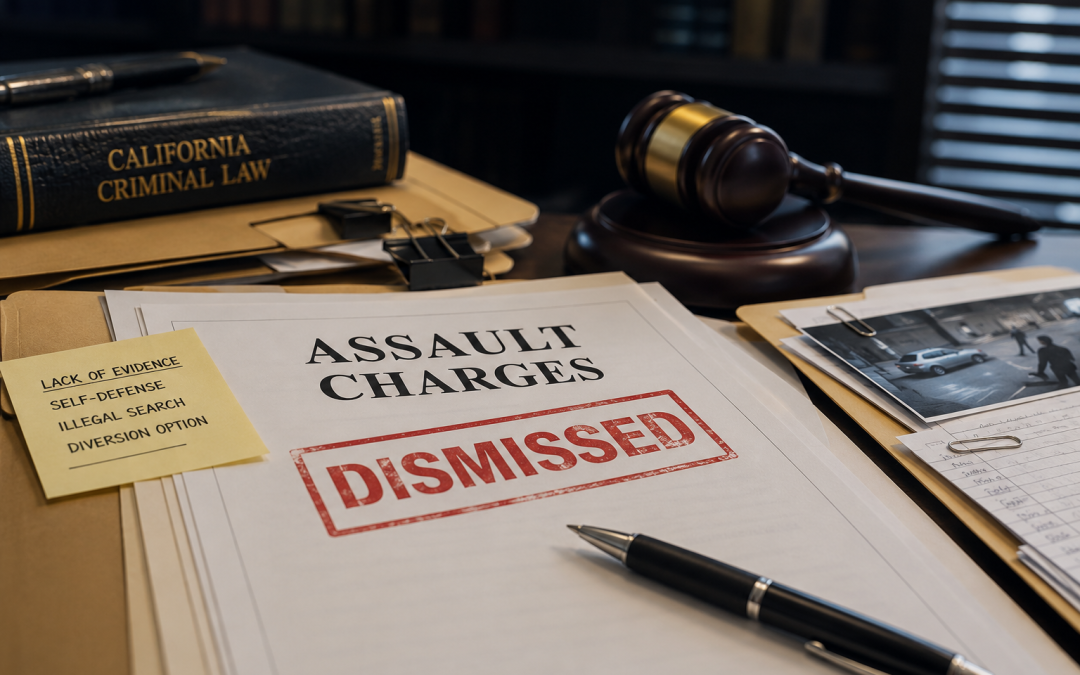
A prosecutor, judge, or court process can end an assault case before trial. However, dismissal depends on the evidence, the charge, and the stage of the case.
In California, assault cases range from simple misdemeanor assault to assault with a deadly weapon. Therefore, the best defense depends on witness statements, video evidence, police conduct, and the facts surrounding the alleged incident.
What Is Assault in California?
California defines assault under Penal Code Section 240 as an unlawful attempt, combined with present ability, to commit a violent injury on another person.
Assault does not require physical contact. By contrast, battery involves actual unlawful touching or force. As a result, prosecutors can file an assault charge even when no one suffered an injury.
Simple assault usually qualifies as a misdemeanor. Her Lawyer’s guide on how to beat a simple assault charge explains common defense issues in lower-level assault cases.
What Are the Penalties for Assault?
Simple assault can carry jail time, fines, probation, protective orders, restitution, and a criminal record.
Under Penal Code Section 241, simple assault can lead to up to six months in county jail, a fine of up to $1,000, or both. In addition, penalties may increase when the alleged victim belongs to a protected category, such as a peace officer, firefighter, emergency medical technician, or certain healthcare worker performing official duties.
More serious cases may fall under Penal Code Section 245. That statute covers assault with a deadly weapon, assault with a firearm, and assault by force likely to produce great bodily injury.
Can the Alleged Victim Drop Assault Charges?
The alleged victim cannot personally end a criminal case. Once police and prosecutors get involved, the state controls the case.
However, the alleged victim’s cooperation can still matter. For example, a prosecutor may reconsider the case if a witness changes a statement, refuses to cooperate, or provides new information.
Still, prosecutors may continue the case using police reports, 911 calls, body-camera footage, medical records, photos, or testimony from other witnesses.
Dismissal Based on Weak Evidence
Prosecutors must prove every element beyond a reasonable doubt. If the evidence does not support the charge, the prosecutor may decline to file, reduce the charge, or dismiss the case.
Evidence problems may involve:
- No present ability to use force
- No willful act
- No reliable witness testimony
- Conflicting statements
- Missing video evidence
- Weak identification of the accused person
- No proof of a weapon or threat
- Facts that support self-defense
A defense attorney may point out these weaknesses early. In some cases, this can help prevent the case from moving forward.
Self-Defense or Defense of Others
Self-defense can support dismissal when the accused person acted to prevent imminent harm. Defense of another person may also apply.
However, the force must fit the circumstances. A person generally cannot use excessive force after the danger has passed.
Useful evidence may include witness statements, videos, injuries, text messages, prior threats, 911 calls, and photos from the scene. Because timing matters, the defense should focus on what the accused person reasonably believed at the moment of the incident.
False Accusation or Mistaken Identity
Some assault cases involve false accusations, exaggeration, or mistaken identity. These issues often arise after arguments, breakups, custody disputes, bar fights, or crowded public incidents.
For example, surveillance footage may show someone else caused the threat. Likewise, phone location data may show the accused person was not present.
A defense may rely on alibi evidence, video, messages, witness statements, or inconsistencies in the accuser’s story. The goal is to challenge the evidence clearly and directly.
Police Misconduct or Illegal Evidence
Police conduct can also affect an assault case. If officers violated constitutional rights, the defense may ask the judge to exclude key evidence.
Common issues include unlawful stops, illegal searches, improper arrests, Miranda violations, or lack of probable cause. If the judge excludes important evidence, the prosecutor may no longer have enough proof to continue.
As a result, a successful suppression motion can sometimes lead to dismissal or a better resolution.
Diversion and Dismissal
Some misdemeanor assault cases may qualify for diversion. Under Penal Code Section 1001.95, a judge may offer misdemeanor diversion in qualifying cases.
Diversion may require counseling, classes, community service, restitution, or no contact with the alleged victim. If the defendant completes the required terms, the court must dismiss the action.
However, not every case qualifies. Current charges involving domestic violence, stalking, or sex offender registration requirements do not qualify under this diversion statute.
Plea Bargains Are Different From Dismissal
A plea bargain may reduce risk, but it does not always erase the case. A defendant may plead to a lesser charge, avoid jail, or receive probation while still ending up with a conviction.
In some plea agreements, prosecutors dismiss one count while another count remains. Therefore, the long-term result depends on the exact charge, probation terms, and record-cleaning options.
Before accepting a plea, a defendant should understand possible immigration, licensing, firearm, employment, and custody consequences.
When Assault Allegations Involve Sexual Conduct
Assault cases involving sexual conduct may follow different rules. These cases may involve separate criminal statutes, registration concerns, and civil claims.
Her Lawyer’s article on the sexual assault statute of limitations by state explains how civil and criminal deadlines may differ in sexual assault matters.
FAQs About Getting Assault Charges Dismissed
Can every assault case be dismissed?
No. Dismissal depends on the facts, evidence, prosecutor’s decision, and available defenses.
Can self-defense lead to dismissal?
Yes. Self-defense may lead to dismissal when the evidence shows the accused person used reasonable force to prevent imminent harm.
Does lack of injury require dismissal?
No. California assault does not require physical injury. However, lack of injury may weaken the case when prosecutors claim serious force or bodily harm.
Can diversion lead to dismissal?
Yes. If the case qualifies and the defendant completes all court-ordered diversion terms, the court must dismiss the action.
Get Help With an Assault Charge
An assault charge can affect freedom, employment, immigration status, custody, licensing, and reputation. Early legal review can help identify weak evidence, unlawful police conduct, and possible paths toward dismissal.
Her Lawyer’s California criminal defense attorneys assist with assault, battery, and related criminal defense matters. Contact Her Lawyer to discuss a California assault charge.