
Revenge porn can feel like a sexual violation, and many survivors describe the harm in terms similar to sexual assault. However, California law usually treats revenge porn as a separate criminal offense involving nonconsensual distribution of intimate images, not as rape or sexual battery.
The legal distinction matters. A person may face criminal charges for distributing private intimate images without consent, and the person depicted may also have a civil claim for damages. Still, the case usually proceeds under California’s revenge porn statute rather than traditional sexual assault laws.
What Is Revenge Porn Under California Law?
California addresses revenge porn under Penal Code Section 647(j)(4). The law applies when a person intentionally distributes an image of another identifiable person’s intimate body parts, or an image showing sexual intercourse, sodomy, oral copulation, sexual penetration, or masturbation, under circumstances where the parties agreed or understood the image would remain private.
In addition, prosecutors must prove the person distributing the image knew or should have known distribution would cause serious emotional distress, and the person depicted suffered that distress. As a result, the law focuses on privacy, consent, emotional harm, and the act of distribution.
California’s statute also covers certain computer-generated or photorealistic intimate images when the law’s requirements apply. This means some deepfake or digitally created intimate images may fall within the statute if prosecutors can prove the required elements.
Is Revenge Porn Considered Sexual Assault?
Revenge porn is generally not charged as sexual assault under California law. Traditional sex offense statutes usually focus on physical sexual conduct, such as rape, sexual battery, or sexual penetration without legal consent.
For example, Penal Code Section 261 defines rape through specific circumstances involving sexual intercourse and lack of legal consent. Meanwhile, Penal Code Section 243.4 addresses sexual battery, which usually requires touching an intimate part of another person under circumstances listed in the statute.
By contrast, revenge porn usually involves distribution of an intimate image rather than physical sexual contact. Because of that difference, California treats it as a disorderly conduct offense under Penal Code Section 647(j)(4), even though the harm can be deeply sexual, personal, and traumatic.
Criminal Penalties for Revenge Porn
A revenge porn violation under Penal Code Section 647(j)(4) is a misdemeanor. The same statute provides penalties of up to six months in county jail, a fine of up to $1,000, or both.
However, penalties can increase in certain situations. If the person depicted is a minor, or if the defendant has a prior conviction for specified invasion-of-privacy conduct, the punishment may increase to up to one year in county jail, a fine of up to $2,000, or both.
A criminal case may also create consequences beyond jail or fines. Depending on the facts, a conviction may affect employment, professional licensing, immigration status, family law disputes, and restraining order issues.
Can Someone Sue for Revenge Porn in California?
Yes. California also allows a civil lawsuit for nonconsensual distribution of intimate images under Civil Code Section 1708.85. This law gives a private cause of action when someone intentionally distributes intimate material without consent and the legal requirements are met.
A civil claim may allow the person depicted to seek damages. In some cases, the court may also consider privacy protections during the litigation process because these cases involve sensitive images and personal information.
The civil statute is separate from the criminal law. Therefore, a person may have a civil claim even when prosecutors do not file criminal charges, although each case depends on the facts and available evidence.
Evidence in a Revenge Porn Case
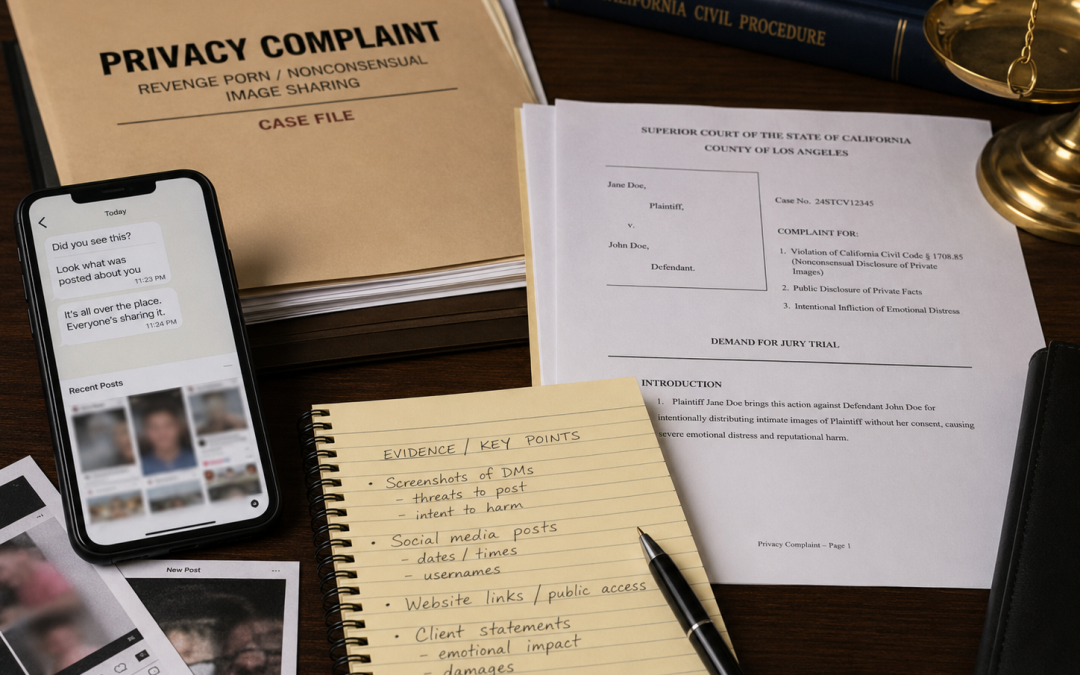
Revenge porn cases often depend on digital evidence. The strongest evidence usually shows who distributed the image, what image was distributed, where it appeared, when it appeared, and whether the image was expected to remain private.
Helpful evidence may include:
- Screenshots of posts, messages, or uploads
- URLs and account names
- Text messages or emails about the image
- Proof the image was private
- Witness statements
- Platform reports or takedown notices
- Metadata, if available
- Police reports or civil complaint records
- Evidence of emotional distress
Screenshots should preserve the full context whenever possible, including dates, usernames, captions, comments, and platform information. In addition, saving original messages can matter because edited or cropped screenshots may leave out facts needed to prove identity, privacy expectations, or intent.
What If the Image Was Originally Shared Consensually?
Consent to take or send an intimate image does not always mean consent to distribute it. California’s revenge porn law focuses on whether the parties agreed or understood the image would remain private and whether the person distributing it knew or should have known distribution would cause serious emotional distress.
For example, a private image sent during a relationship may still support a revenge porn case if someone later posts or sends it to others without consent. On the other hand, prosecutors still need evidence connecting the accused person to the distribution and showing the image met the statute’s requirements.
Her Lawyer’s article on California rape laws and penalties explains how California handles separate sex crime statutes involving lack of consent, force, intoxication, and related issues.
FAQs About Revenge Porn and Sexual Assault
Is revenge porn a sex crime in California?
Revenge porn is a criminal offense involving nonconsensual distribution of intimate images. However, California usually charges it under Penal Code Section 647(j)(4), not under rape or sexual battery statutes.
Can revenge porn involve deepfake images?
Yes. California’s revenge porn statute can cover certain photorealistic or computer-generated intimate images when the image depicts an identifiable person and the statutory requirements apply.
Can a person sue for revenge porn?
Yes. Civil Code Section 1708.85 allows a person depicted in certain nonconsensually distributed intimate material to bring a civil claim for damages when the legal requirements are met.
Does revenge porn require revenge as a motive?
Not necessarily. Although the phrase “revenge porn” suggests revenge, the statute focuses on intentional distribution, privacy expectations, emotional distress, and the nature of the image.
Legal Help With a Revenge Porn Case
A revenge porn case can involve criminal charges, civil liability, privacy concerns, restraining orders, platform takedown issues, and emotional harm. The strongest next steps often depend on the evidence, where the image appeared, who distributed it, and whether the person depicted expected the image to remain private.
Her Lawyer, A Professional Law Corporation, assists with California matters involving nonconsensual image sharing, privacy violations, and related criminal defense issues. Contact Her Lawyer to request a confidential consultation and discuss possible next steps.