
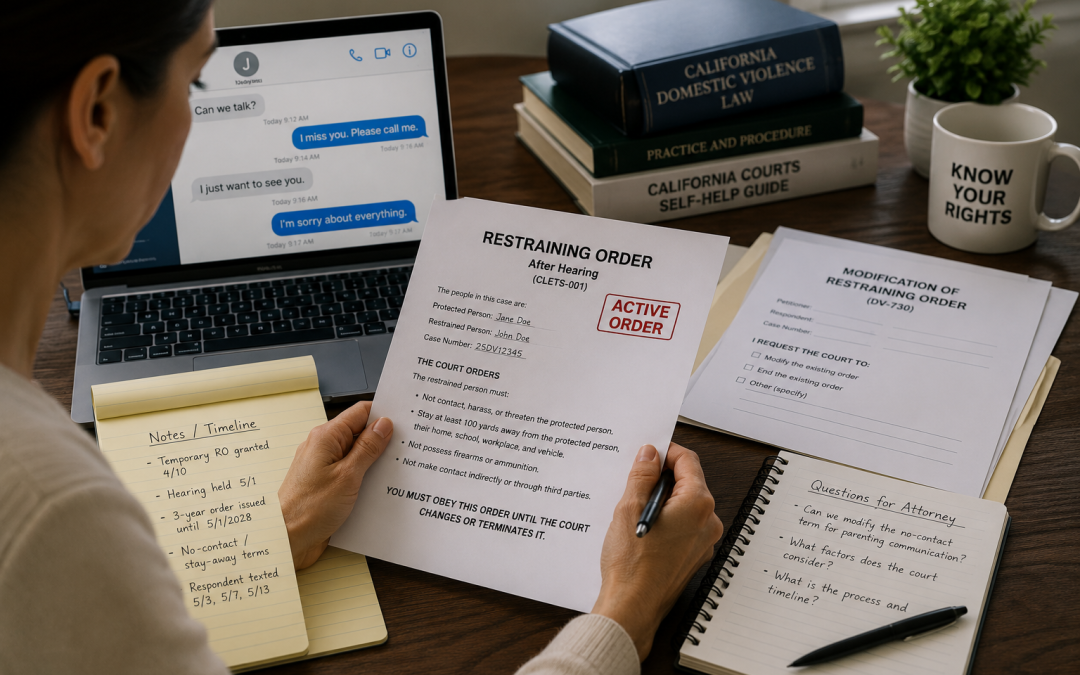
A protected person usually cannot be criminally charged with violating their own restraining order in California because the order restrains the restrained person, not the protected person. However, contact from the protected person can still create serious confusion, safety concerns, and legal consequences for the restrained person.
California restraining orders remain court orders until a judge changes or ends them. Private agreement, texting, meeting, reconciliation, or consent does not cancel the order. If the restrained person responds, visits, or communicates in a way the order prohibits, law enforcement or prosecutors may still treat that conduct as a violation.
Who Can Violate a Restraining Order?
California law focuses on the person bound by the order. Under Penal Code Section 273.6, an intentional and knowing violation of certain protective or restraining orders can be a misdemeanor. The statute applies to the person who violates the court’s restrictions.
A restraining order may prohibit contact, calls, texts, emails, social media messages, third-party messages, coming near a home or workplace, firearm possession, or other conduct. If the court order tells the restrained person not to contact the protected person, the restrained person must obey that order even if the protected person starts the conversation.
The California Courts Self-Help Guide explains that law enforcement may help enforce a restraining order if the restrained person violates it, and protected people should keep a copy available in case police need to review the terms. The court’s guide on how to enforce a restraining order also discusses CLETS, California’s law enforcement restraining order database.
What If the Protected Person Initiates Contact?
A protected person may call, text, email, or visit the restrained person. That contact does not automatically erase the order. In many cases, the safest legal response for the restrained person is not to reply and to avoid any prohibited contact.
For example, if a domestic violence restraining order says the restrained person must not contact the protected person, a friendly text from the protected person does not give permission to respond. A reply may still violate the order.
The protected person’s conduct may matter in court, especially if a dispute later arises over credibility, safety, modification, or enforcement. Still, the order remains valid unless a judge changes it.
Can Consent Cancel a No-Contact Order?
No. Consent alone does not cancel a California restraining order. Only the court can change or terminate the order.
California Courts explains that either side in a domestic violence restraining order case can ask to change or end the order. However, the person must file the correct court papers and receive a judge’s decision. The state’s guide on how to change or end a restraining order explains that the protected or restrained person may make this request.
If a judge ends the order, the court may issue a termination order. Until then, the restrained person should follow every term of the active order.
What If Both People Want Contact?
Sometimes both people want contact again after a restraining order. This can happen after reconciliation, shared parenting issues, property exchanges, counseling, or changed circumstances.
Even then, the restrained person should not rely on informal permission. Instead, the parties may need a formal request to modify or terminate the order. California Courts explains that a person who wants to change or end orders in a Restraining Order After Hearing generally must file court papers asking for that change.
A court may keep, change, or end the order depending on the facts. Until the judge signs a new order, the old terms remain controlling.
Risks for the Protected Person
A protected person usually does not face a Penal Code Section 273.6 charge for contacting the restrained person because the order does not restrain them. Still, initiating contact can create practical and legal risks.
Possible risks may include:
- Confusion about whether the order remains active
- Safety concerns if contact restarts conflict
- Evidence disputes in future hearings
- Problems enforcing the order later
- Custody or family law complications
- Claims that the protected person no longer fears contact
- New messages becoming evidence
In some situations, a protected person’s conduct could raise separate issues, such as harassment, threats, stalking, false reports, or violation of another order. Those issues depend on the facts and any orders that apply to the protected person.
Risks for the Restrained Person
The restrained person faces the clearest risk. If the order says “no contact,” a response may create criminal exposure even when the protected person started the exchange.
A restrained person may also violate the order through indirect contact. For example, asking a friend to pass along a message may violate the order if the order prohibits third-party contact. Showing up at a protected person’s home, school, workplace, or vehicle may also create a violation if the order includes stay-away terms.
Penal Code Section 273.6 allows misdemeanor penalties of up to one year in county jail, a fine of up to $1,000, or both for certain knowing and intentional violations. Penalties can increase when injury, repeat violations, or other aggravating facts exist.
What Should Someone Do If Contact Happens?
If contact happens, the next step depends on safety, the order terms, and who initiated the contact. The restrained person should avoid responding to prohibited communication and should keep records showing what happened.
Useful steps may include:
- Save texts, emails, voicemails, or call logs
- Avoid deleting messages
- Do not respond if the order prohibits contact
- Keep a copy of the restraining order
- Document dates, times, and locations
- Use court-approved communication tools if allowed
- Ask the court to modify the order if contact should change
If the protected person feels unsafe, they may contact law enforcement or seek help enforcing the order. If both sides want lawful contact, the safer path is a court request to change or end the order.
FAQs About Violating Your Own Restraining Order
Can the protected person violate their own restraining order?
Usually, no. A restraining order normally restrains the restrained person, not the protected person. However, the protected person’s contact can create confusion, safety risks, and evidence issues.
Can the restrained person respond if the protected person texts first?
Not if the order prohibits contact. A protected person’s message does not override the court order. The restrained person should follow the order until a judge changes it.
Can both people agree to ignore the restraining order?
No. A private agreement does not cancel a court order. The parties must ask the court to modify or terminate the restraining order if they want different terms.
How can a restraining order be changed or ended?
Either side may ask the court to change or end certain restraining orders by filing the required forms and attending the hearing. The order remains active unless the judge changes or terminates it.
Legal Help With a Restraining Order Issue
Restraining order contact issues can affect safety, criminal exposure, custody, housing, immigration concerns, and future court hearings. A strong next step often depends on the order’s exact language, who contacted whom, whether any response occurred, and whether a court modification is needed.
Her Lawyer, A Professional Law Corporation, assists with California restraining order and family law matters involving protective orders, violations, modifications, and related issues. Contact Her Lawyer to request a confidential consultation and discuss possible next steps.