
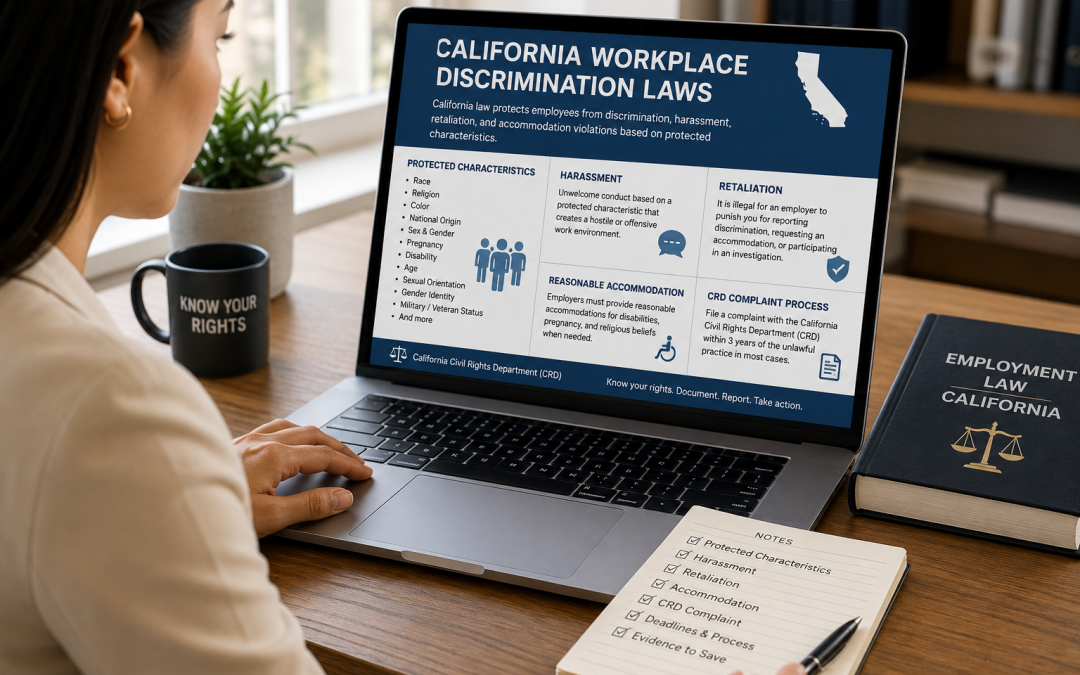
California workplace discrimination laws protect applicants and employees from unfair treatment based on protected characteristics. These laws may apply to hiring, pay, promotion, discipline, termination, harassment, retaliation, accommodations, and other workplace decisions.
Under California’s Fair Employment and Housing Act, often called FEHA, employees receive broad workplace protections. The California Civil Rights Department enforces state laws prohibiting employment discrimination, harassment, retaliation, reasonable accommodation violations, CFRA violations, and pregnancy disability leave violations.
What Is Workplace Discrimination in California?
Workplace discrimination happens when an employer treats an applicant or employee worse because of a protected characteristic. In practice, this conduct may affect recruitment, interviews, job assignments, training, pay, promotions, discipline, or firing.
California Government Code Section 12940 makes it unlawful for covered employers to discriminate in hiring, employment, compensation, terms, conditions, or privileges of employment because of protected characteristics.
Discrimination may involve:
- Refusing to hire an applicant
- Paying an employee less
- Denying a promotion
- Giving worse assignments
- Applying discipline unfairly
- Denying training opportunities
- Terminating employment
- Creating biased workplace policies
However, a workplace decision may feel unfair without being unlawful. A legal discrimination claim usually requires facts connecting the employer’s action to a protected characteristic.
Protected Characteristics Under California Law
California law protects many characteristics. Through California Government Code Section 12920, the state declares a public policy protecting the right to seek, obtain, and hold employment without discrimination based on protected traits.
Protected characteristics may include:
- Race
- Religious creed
- Color
- National origin
- Ancestry
- Physical disability
- Mental disability
- Medical condition
- Genetic information
- Marital status
- Sex
- Pregnancy
- Gender
- Gender identity
- Gender expression
- Age
- Sexual orientation
- Reproductive health decisionmaking
- Military or veteran status
Importantly, an employer does not need to openly admit bias. Instead, discrimination may appear through timing, unequal treatment, comments, patterns, or inconsistent explanations.
Harassment Based on Protected Characteristics
Harassment may violate California law when it targets a protected characteristic and affects the work environment. This conduct can involve slurs, offensive jokes, sexual comments, threats, unwanted touching, repeated insults, or hostile treatment.
The Civil Rights Department handles employment complaints involving discrimination and harassment based on FEHA-protected characteristics, including race, sex, religion, national origin, and disability.
Useful harassment evidence may include:
- Text messages
- Emails
- Chat messages
- Witness names
- HR complaints
- Supervisor responses
- Photos or screenshots
- Timeline of incidents
In some cases, an employer may also face responsibility for harassment by supervisors, coworkers, or nonemployees. This issue often depends on whether the employer knew or should have known about the conduct and failed to take proper corrective action.
Retaliation for Reporting Discrimination
Employees also receive protection from retaliation. Retaliation may happen when an employer punishes an employee for reporting discrimination, opposing unlawful conduct, requesting accommodation, helping another employee complain, or participating in an investigation.
Retaliation may include:
- Termination
- Demotion
- Reduced hours
- Worse shifts
- Discipline
- Threats
- Exclusion
- Negative reviews
- Denial of promotion
Timing often matters in retaliation cases. For example, termination shortly after a discrimination complaint may deserve closer review, especially when the employer’s explanation conflicts with prior records.
Her Lawyer’s article on 7 examples of workplace retaliation explains retaliation issues in more detail.
Reasonable Accommodation and Disability Discrimination
Reasonable accommodation issues may involve disability, pregnancy, religion, or another legally protected need. Depending on the facts, an accommodation may include modified duties, schedule changes, leave, remote work, equipment, religious dress, grooming practices, or other workplace adjustments.
The Civil Rights Department states that it handles complaints involving reasonable accommodation, CFRA, and pregnancy disability leave. As a result, employers should usually review accommodation requests and consider effective options before denying them.
Useful records may include accommodation requests, medical notes, HR emails, policy documents, schedules, and written denial explanations.
Filing a Workplace Discrimination Complaint
Many California workplace discrimination claims require an administrative complaint before a lawsuit. Under California Government Code Section 12960, employment discrimination, harassment, and related FEHA complaints generally must be filed with CRD within three years from the date of the unlawful practice.
Federal claims may involve the EEOC. The EEOC explains that most federal workplace discrimination laws require a charge before a lawsuit.
A worker should save:
- HR complaints
- Emails and texts
- Performance reviews
- Discipline notices
- Pay records
- Schedule records
- Accommodation requests
- Termination notices
- Witness names
- Agency filings
FAQs About California Workplace Discrimination Laws
What counts as workplace discrimination in California?
Workplace discrimination may occur when an employer treats an applicant or employee worse because of a protected characteristic. Examples may involve race, religion, sex, pregnancy, disability, age, national origin, sexual orientation, gender identity, or another protected trait.
Can harassment be workplace discrimination?
Yes. Harassment based on a protected characteristic may violate California workplace discrimination laws when it affects working conditions or creates a hostile work environment.
Can an employer retaliate after a discrimination complaint?
No. California law protects employees from retaliation after they report discrimination, oppose unlawful conduct, request accommodation, or participate in an investigation.
How long does an employee have to file a California discrimination complaint?
Many FEHA employment complaints must be filed with CRD within three years from the date of the unlawful practice. However, other claims may have different deadlines.
Legal Help With California Workplace Discrimination
California workplace discrimination laws can affect hiring, pay, promotions, harassment complaints, retaliation, accommodations, leave rights, and wrongful termination claims. The best next step often depends on the protected characteristic, employer action, timeline, evidence, complaint history, and filing deadline.
Her Lawyer, A Professional Law Corporation, assists with California employment matters involving discrimination, harassment, retaliation, wrongful termination, accommodation issues, leave rights, and workplace protections. Contact Her Lawyer to request a confidential consultation and discuss possible next steps.