
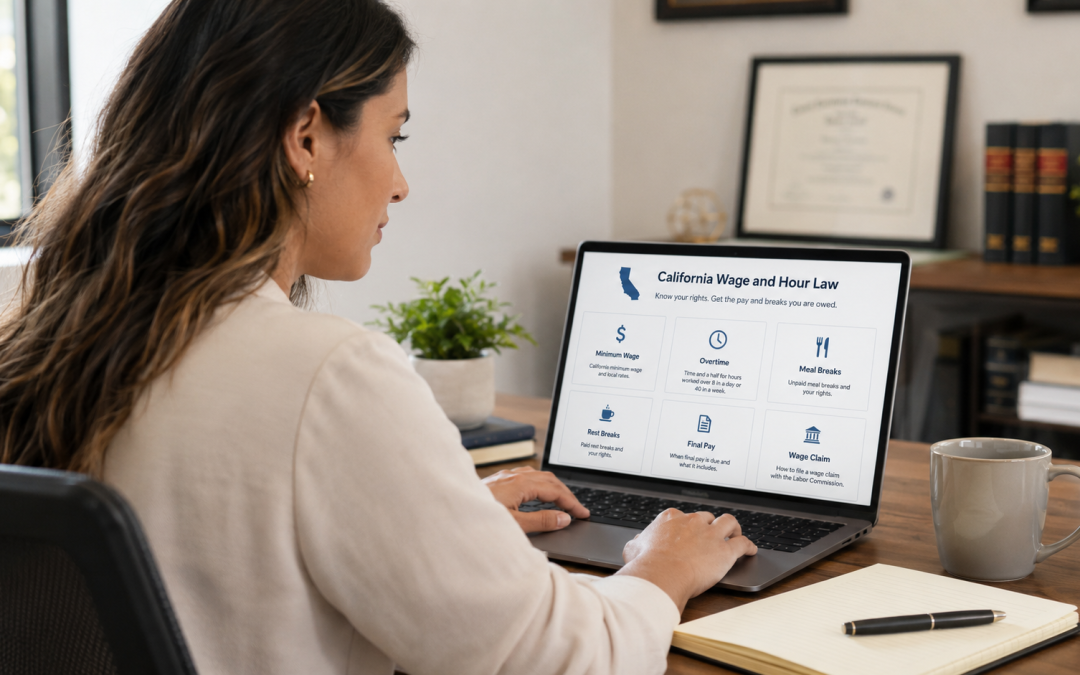
California wage and hour laws protect employees from unpaid wages, improper overtime, missed meal breaks, missed rest breaks, late final pay, and inaccurate wage statements. These laws often apply to nonexempt employees, although some rules depend on job duties, pay structure, industry, and worker classification.
California gives employees stronger wage protections than federal law in many areas. For example, the state uses daily overtime rules, detailed meal and rest break requirements, and strict final paycheck deadlines.
Minimum Wage in California
California sets a statewide minimum wage, and some cities or counties require higher local rates. The California Labor Commissioner lists the current statewide minimum wage and explains that employers must follow the higher applicable wage when local rules require more.
Minimum wage issues may involve:
- Paying below the required hourly rate
- Misclassifying employees as exempt
- Requiring off-the-clock work
- Failing to pay for training time
- Improperly deducting wages
- Using unpaid trial shifts
An employee should compare pay stubs, hours worked, and the applicable state or local minimum wage.
Overtime Pay
California Labor Code Section 510 requires overtime pay for many nonexempt employees who work more than eight hours in a workday, more than 40 hours in a workweek, or the first eight hours on the seventh consecutive day of work in a workweek.
Overtime issues may involve:
- Unpaid daily overtime
- Unpaid weekly overtime
- Misclassification as exempt
- Off-the-clock work
- Incorrect regular rate calculations
- Unpaid double time
A job title alone does not decide overtime rights. In many cases, the employee’s actual duties and pay structure matter more than the title.
Meal Breaks
California meal break rules require many employees to receive a 30-minute unpaid meal period when they work more than five hours. The Labor Commissioner’s meal period guidance explains that employees must receive no less than a 30-minute meal period when the work period exceeds five hours, unless a valid waiver applies.
Meal break problems may include:
- Missed meal breaks
- Late meal breaks
- Short meal breaks
- Interrupted meal breaks
- Meal breaks spent working
- Pressure to waive breaks improperly
If an employer fails to provide a required meal period, California Labor Code Section 226.7 may require one additional hour of pay at the employee’s regular rate for each workday the meal period was not provided.
Rest Breaks
California also requires paid rest breaks for many nonexempt employees. The Labor Commissioner’s wages and breaks guidance explains that most California workers must receive required breaks, along with overtime pay and accurate pay statements.
Rest break issues may involve:
- No rest breaks
- Short rest breaks
- Work interruptions during breaks
- Breaks discouraged by managers
- Staffing levels that make breaks impossible
- No premium pay for missed breaks
Rest breaks differ from meal breaks because rest breaks usually remain paid time.
Final Pay and Paydays
California final pay rules require employers to pay wages on time. The Labor Commissioner’s payday guidance explains regular payday and final wage requirements, including rules that apply after termination or resignation.
Final pay may include:
- Regular wages
- Overtime
- Earned commissions
- Accrued vacation
- Missed break premiums
- Other earned compensation
Late final pay may support a wage claim and possible penalties, depending on the facts.
Wage Statements and Records
California employers must provide accurate wage statements. California Labor Code Section 226 requires itemized wage statements with specific information, including wages earned, hours worked for nonexempt employees, deductions, pay period dates, and employer information.
Useful records may include:
- Pay stubs
- Timecards
- Work schedules
- Meal break records
- Rest break notes
- Commission plans
- Final paycheck records
- Emails or texts about hours
A worker should preserve records lawfully and avoid taking confidential employer files outside authorized access.
Filing a Wage Claim
An employee may file a wage claim when an employer fails to pay wages or benefits owed. The California Labor Commissioner provides wage claim forms and filing instructions for unpaid wages, overtime, commissions, vacation pay, and other wage issues.
The process may involve document review, a settlement conference, a hearing, or an order, decision, or award. Deadlines vary by claim type, so workers should organize records early.
Her Lawyer’s article on California wage claim FAQs explains the wage claim process in more detail.
FAQs About California Wage and Hour Laws
What are California wage and hour laws?
California wage and hour laws regulate minimum wage, overtime, meal breaks, rest breaks, paydays, final pay, wage statements, and wage claims.
Does California require daily overtime?
Yes. Many nonexempt employees earn overtime after more than eight hours in a workday, along with weekly and seventh-day overtime protections.
Can an employee file a wage claim for missed breaks?
Yes. Missed meal or rest breaks may support a wage claim when an employer fails to provide required breaks or premium pay.
What records help with a wage and hour claim?
Helpful records include pay stubs, timecards, schedules, break records, final paycheck documents, wage statements, emails, texts, and a timeline of unpaid work.
Legal Help With California Wage and Hour Laws
California wage and hour laws can affect regular wages, overtime, breaks, final pay, wage statements, commissions, vacation pay, and retaliation concerns. The best next step often depends on the employee’s records, job duties, pay structure, employer policy, and filing deadline.
Her Lawyer, A Professional Law Corporation, assists with California employment matters involving unpaid wages, overtime, meal and rest breaks, final pay, wage claims, retaliation, and workplace rights. Contact Her Lawyer to request a confidential consultation and discuss possible next steps.