
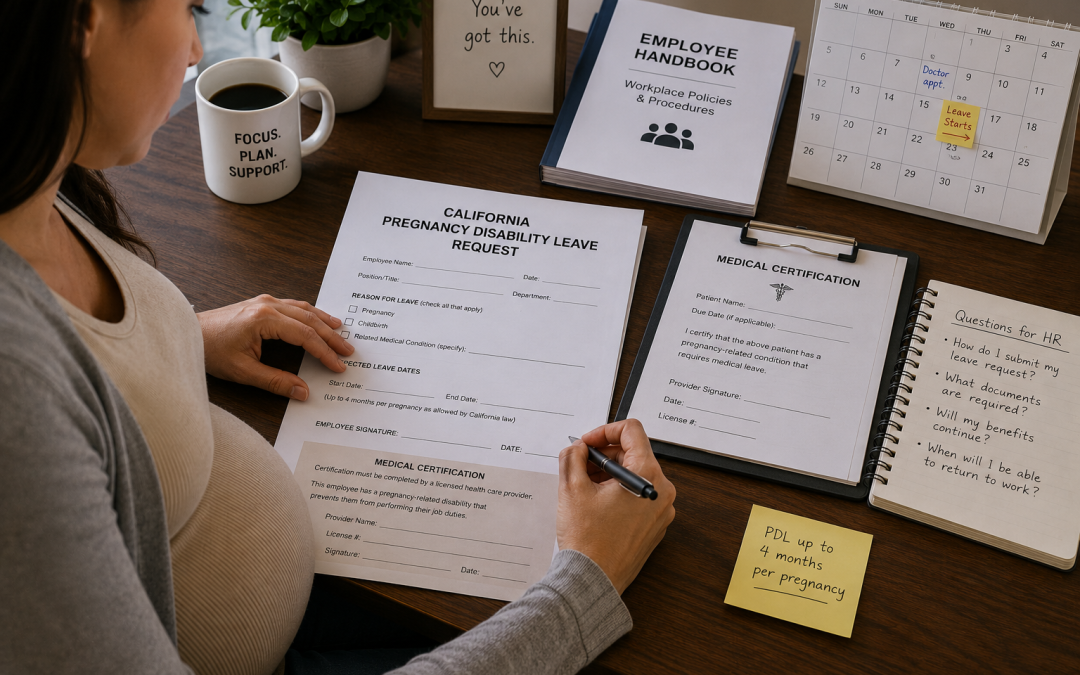
California pregnancy disability leave gives job-protected time off to employees who cannot work because of pregnancy, childbirth, or a related medical condition. This leave can cover time before birth, recovery after birth, pregnancy complications, prenatal care, severe morning sickness, bed rest, miscarriage, postpartum depression, or other pregnancy-related disability.
Pregnancy disability leave, often called PDL, is different from baby bonding leave. PDL protects time off while the employee is disabled by pregnancy or childbirth. Baby bonding leave under CFRA may provide additional job-protected time after the disability period ends.
What Is Pregnancy Disability Leave?
California law requires covered employers to provide pregnancy disability leave when an employee becomes disabled by pregnancy, childbirth, or a related medical condition. Government Code Section 12945 protects leave for a reasonable period of time, not to exceed four months, and gives the employee the right to return to work after leave.
The California Civil Rights Department explains that pregnancy disability leave applies when an employee is disabled by pregnancy, childbirth, or a related medical condition. The same state guide also explains that CFRA bonding leave is separate from PDL.
In practical terms, PDL focuses on medical need. A doctor or health care provider may certify when the employee cannot perform work duties because of pregnancy or a related condition.
Who Qualifies for PDL in California?
PDL applies to employees who work for an employer covered by California pregnancy disability leave laws. Unlike some leave laws, PDL does not require the employee to work for the employer for 12 months or meet a 1,250-hour requirement.
An employee may qualify when:
- The employer has five or more employees
- The employee has a pregnancy-related disability
- A health care provider supports the need for leave
- The leave relates to pregnancy, childbirth, or a related medical condition
Because PDL depends on disability, the length and timing of leave can vary. Some employees need leave before birth. Others need leave only during recovery. In higher-risk pregnancies, leave may last longer if the medical provider certifies the need.
How Long Does Pregnancy Disability Leave Last?
California PDL can last up to four months per pregnancy. The exact amount depends on how long the employee remains disabled by pregnancy, childbirth, or a related medical condition.
Many employees use PDL for part of the period before birth and for recovery afterward. However, complications may change the timeline. For example, an employee with severe pregnancy-related symptoms, bed rest, pregnancy-induced hypertension, or postpartum depression may need more time if a provider certifies disability.
PDL does not need to be taken all at once. In some cases, an employee may take intermittent leave or work on a reduced schedule when medically necessary.
Is Pregnancy Disability Leave Paid?
PDL provides job protection, but it does not automatically provide full wages. However, an employee may have pay options during leave.
Possible pay sources may include:
- California State Disability Insurance
- Employer-provided short-term disability benefits
- Accrued sick leave
- Accrued vacation or PTO, depending on policy
- Paid family leave after disability ends, if eligible
- Employer wage replacement programs
The Employment Development Department explains that California State Disability Insurance may provide partial wage replacement when a worker cannot perform regular or customary work because of pregnancy or childbirth. After the disability period, California Paid Family Leave may provide partial wage replacement for bonding with a new child, if the worker qualifies.
Job protection and wage replacement are separate. An employee may have job-protected PDL even when pay comes from a different source.
PDL, CFRA, and Baby Bonding Leave
PDL and CFRA serve different purposes. PDL covers the period when the employee is disabled by pregnancy, childbirth, or a related condition. CFRA can provide baby bonding leave after the child’s birth, adoption, or foster placement.
California’s CFRA statute states that CFRA leave is in addition to pregnancy disability leave when the employee otherwise qualifies. This means an employee may use PDL for pregnancy disability and then use CFRA bonding leave after the PDL period ends.
Generally, CFRA bonding leave can provide up to 12 weeks of job-protected leave. Eligibility depends on employer size, length of employment, hours worked, and other legal requirements.
Employer Duties During PDL
Employers must treat pregnancy disability leave carefully. An employer cannot deny protected PDL, retaliate against an employee for taking leave, or interfere with pregnancy-related rights.
Depending on the facts, employer duties may include:
- Providing PDL when medically supported
- Maintaining group health coverage during protected leave
- Restoring the employee to the same or a comparable position
- Considering reasonable accommodation
- Allowing medically necessary transfer to a less strenuous or hazardous position
- Avoiding retaliation or discrimination
- Keeping medical information confidential
California law also protects reasonable accommodation for pregnancy-related conditions. Under Government Code Section 12945, an employer may need to provide reasonable accommodation for an employee affected by pregnancy, childbirth, or related medical conditions when the employee requests accommodation with health care provider advice.
What If an Employer Denies PDL?
A denial of pregnancy disability leave may raise serious employment law concerns. Problems may also arise if an employer fires an employee during leave, refuses reinstatement, cuts hours, changes duties unfairly, denies accommodation, or disciplines an employee for pregnancy-related absences.
Helpful evidence may include:
- Leave request emails
- Medical certifications
- Doctor’s notes
- Employer policies
- HR messages
- Schedule changes
- Disciplinary notices
- Termination paperwork
- Pay records
- Witness names
An employee may also review state agency options. The California Civil Rights Department provides information about workplace employment protections involving pregnancy, disability, retaliation, family leave, and discrimination.
FAQs About California Pregnancy Disability Leave
How long is pregnancy disability leave in California?
California PDL can last up to four months per pregnancy. The exact length depends on how long a health care provider certifies the employee remains disabled by pregnancy, childbirth, or a related medical condition.
Does PDL require one year of employment?
No. PDL does not require 12 months of employment or 1,250 hours worked. By contrast, CFRA bonding leave has separate eligibility requirements.
Can an employee take CFRA after PDL?
Yes, if the employee qualifies. CFRA baby bonding leave may provide up to 12 additional weeks after pregnancy disability leave ends.
Does PDL protect an employee’s job?
Yes. PDL provides job protection when the law applies. Employers generally must reinstate the employee to the same or a comparable position after protected leave.
Legal Help With Pregnancy Disability Leave
Pregnancy disability leave can affect job protection, pay, health benefits, accommodations, bonding leave, and return-to-work rights. For that reason, the strongest next steps often depend on the medical certification, employer size, leave timeline, workplace policies, and any retaliation or denial of rights.
Her Lawyer, A Professional Law Corporation, assists with California employment matters involving pregnancy disability leave, pregnancy discrimination, medical leave, accommodations, and retaliation. Contact Her Lawyer to request a confidential consultation and discuss possible next steps.